

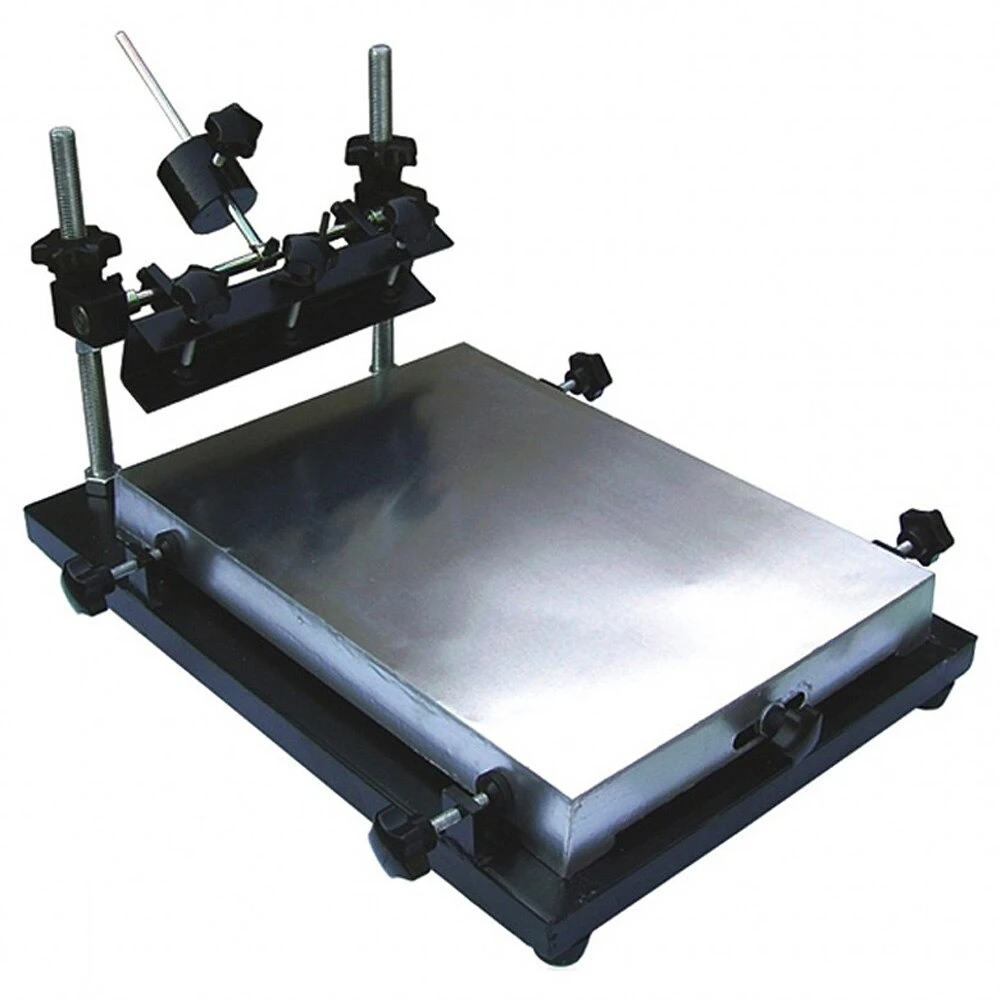
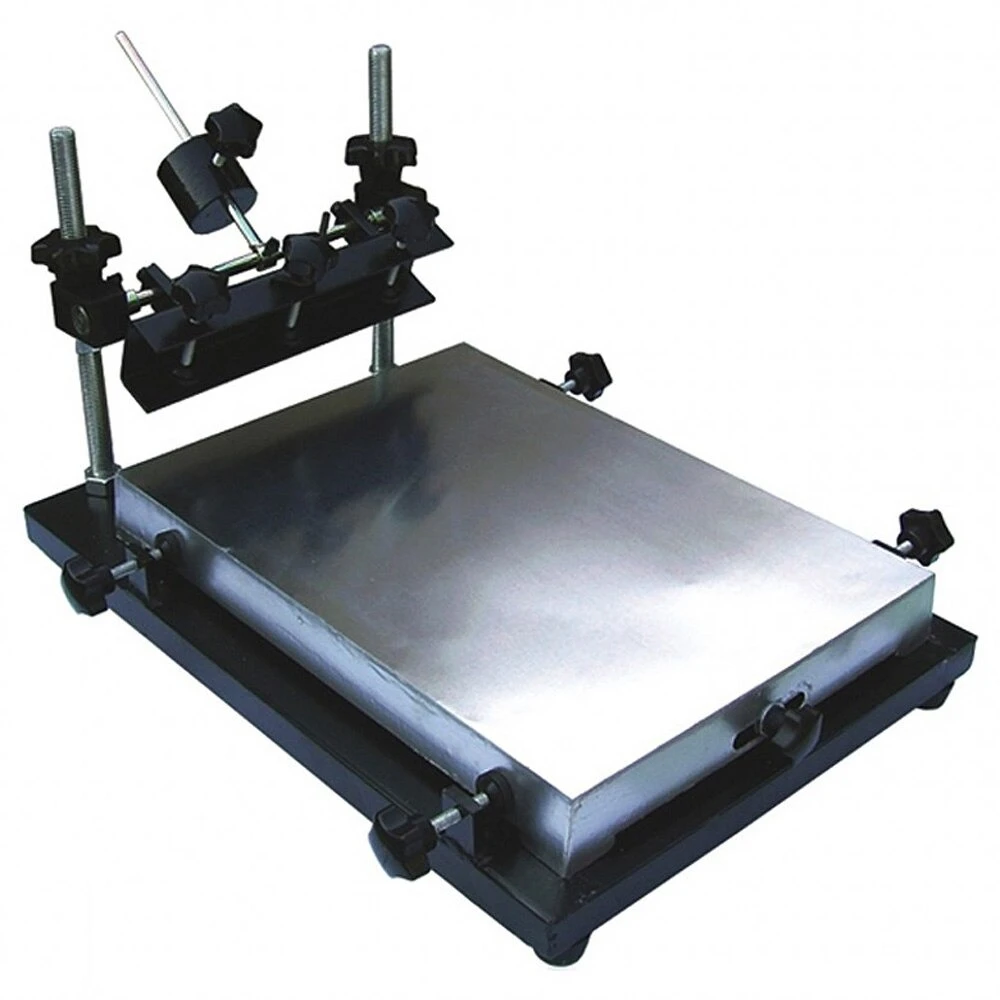
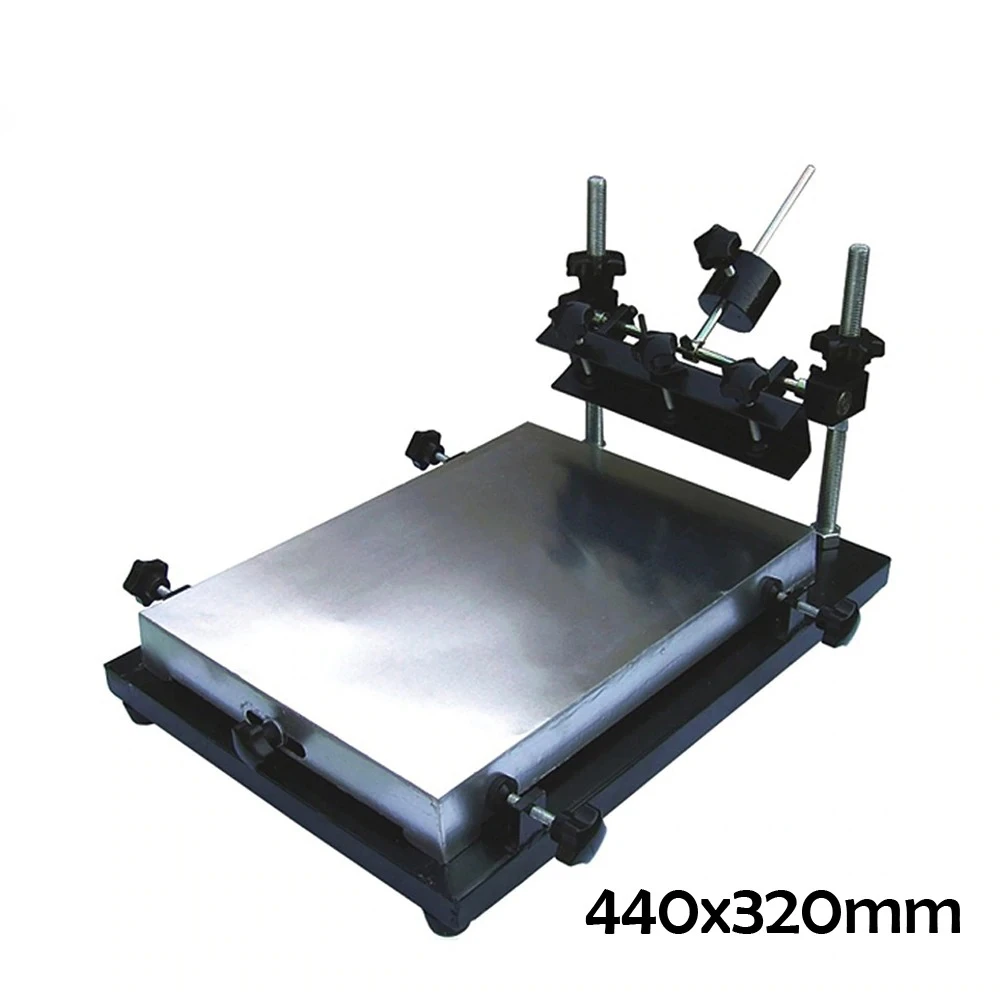
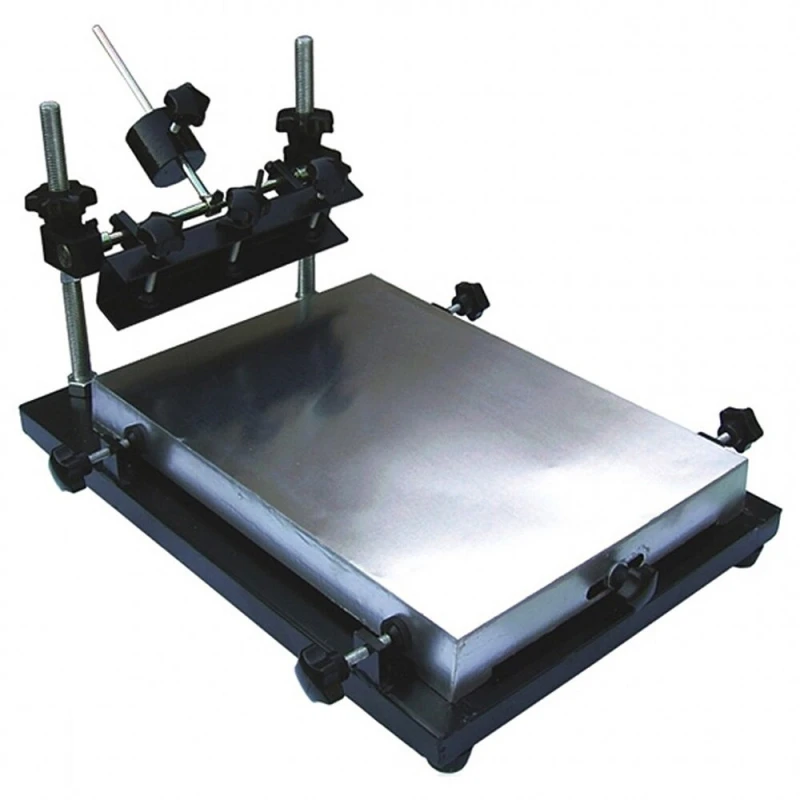
Handmatige SMT-soldeerpasta printer met 440x320mm stencils
Merk: Mlink
IVA inbegrepen (Excl. btw: 40,00€)






Productbeschrijving
De handmatige SMT-soldeerpasta printer is een essentieel hulpmiddel voor de productie van kleine series PCB's. Deze machine maakt het mogelijk om soldeerpasta nauwkeurig op de pads van de printplaten aan te brengen via een metalen stencil, waardoor een gelijkmatige en gecontroleerde toepassing wordt gegarandeerd.
Belangrijkste kenmerken:
- Randpositionering: Maakt nauwkeurige uitlijning van het stencil op de PCB mogelijk.
- Handmatige afstelling: Biedt handmatige controle over het printproces voor meer precisie en flexibiliteit.
- Verstelbare richting: Beweging naar voren, links, rechts, omhoog en omlaag voor exacte positionering.
- Verstelbare afstand rond de tafel: ±10mm voor fijne afstelling bij het plaatsen van het stencil.
- Maximale verstelbare hoogte: Tot 120mm om zich aan te passen aan verschillende stencil- en plaatformaten.
Technische specificaties:
- Model: Impresora tamaño medio
- Werkoppervlak: 440x320mm
- Gewicht: 10 kg
Typische toepassingen:
Deze printer is ideaal voor werkplaatsen en kleine productielijnen die soldeerpasta nauwkeurig op SMT-boards moeten aanbrengen. Vooral geschikt voor prototypes, reparaties en beperkte producties waar kwaliteit en handmatige controle voorop staan.
Compatibiliteit:
Compatibel met elk metalen stencil van het juiste formaat (tot 440x320mm) en PCB's die een handmatige toepassing van soldeerpasta vereisen.
Extra voordelen:
- Eenvoudig te gebruiken en aan te passen aan de specifieke behoeften van het project.
- Compact en licht, ideaal voor kleinere werkruimtes.
- Biedt gedetailleerde controle om verspilling van pasta te voorkomen en een hoogwaardige soldeerverbinding te garanderen.
- Nauwkeurige randpositionering voor stenciluitlijning
- Handmatige afstelling voor gedetailleerde controle van het printproces
- Verstelbare richting: vooruit, links, rechts, omhoog en omlaag
- Verstelbare afstand rond de tafel ±10mm
- Maximale verstelbare hoogte tot 120mm
- Werkoppervlak van 440x320mm
- Lichtgewicht van 10 kg voor eenvoudig gebruik
Klantvragen & Antwoorden
Quin és el principal avantatge d’utilitzar aquesta impressora manual de pasta de soldadura SMT per a petits lots de PCBs davant de mètodes totalment automàtics?
El principal avantatge és la seva flexibilitat per a tirades petites, oferint ajust manual precís en les direccions X, Y i alçada, cosa que permet prototips o petites sèries sense la inversió i complexitat d’un equip automàtic. Aporta un control total sobre el posicionament del stencil i la quantitat de pasta dipositada, ideal quan la producció canvia sovint o requereix personalització.
Quins materials componen l’estructura principal d’aquesta impressora i com influeix això en la seva durabilitat?
Generalment, l’estructura està fabricada en acer i alumini per oferir resistència mecànica, estabilitat i llarga durada davant l’ús regular. Aquests materials suporten la manipulació freqüent de stencils i PCBs sense deformar-se, augmentant la vida útil del producte.
Quin manteniment regular es recomana per assegurar precisió i bon funcionament amb el temps?
El manteniment inclou la neteja periòdica de la superfície i de les parts mòbils per evitar l’acumulació de residus, la revisió i lubricació de guies i cargols d’ajust, i la comprovació que no hi hagi peces soltes o desgastades. Seguir aquestes pautes allarga la precisió i la fiabilitat de la impressora.
Hi ha limitacions tècniques en l’alineació o el tipus de PCBs que puguin afectar la qualitat de la impressió amb aquest model manual?
Sí, atès que l’ajust és manual i el posicionament es fa per les vores, cal verificar que les PCBs siguin planes i tinguin dimensions dins dels rangs especificats. PCBs molt petites o irregulars poden ser difícils d’alinear, cosa que podria afectar la precisió del dipòsit de pasta.
What is the main advantage of using this manual SMT solder paste printer for small PCB batches compared with fully automatic methods?
The main advantage is its flexibility for small runs, offering precise manual adjustment in the X, Y and height directions, which allows prototypes or small series without the investment and complexity of an automatic machine. It provides full control over stencil positioning and the amount of paste deposited, ideal when production changes frequently or requires customisation.
What materials make up the main structure of this printer and how does this affect its durability?
Generally, the structure is made from steel and aluminium to provide mechanical strength, stability and long service life under regular use. These materials withstand frequent handling of stencils and PCBs without deforming, increasing the product's service life.
What regular maintenance is recommended to ensure accuracy and good performance over time?
Maintenance includes periodic cleaning of the surface and moving parts to prevent residue build-up, checking and lubricating guides and adjustment screws, and making sure there are no loose or worn parts. Following these guidelines extends the printer's accuracy and reliability.
Are there any technical limitations in alignment or PCB type that could affect print quality with this manual model?
Yes, since adjustment is manual and positioning is done by edges, the PCBs must be flat and within the specified size range. Very small or irregular PCBs can be difficult to align, which may affect paste deposition accuracy.
What is the main advantage of using this manual SMT solder paste printer for small PCB batches compared with fully automatic methods?
The main advantage is its flexibility for small runs, offering precise manual adjustment in the X, Y and height directions, which allows prototypes or small series without the investment and complexity of an automatic machine. It gives full control over stencil positioning and the amount of paste deposited, ideal when production changes frequently or requires customisation.
What materials make up the main structure of this printer and how does this affect its durability?
Generally, the structure is made from steel and aluminium to provide mechanical strength, stability and long service life under regular use. These materials withstand frequent handling of stencils and PCBs without deforming, increasing the product's service life.
Schrijf een klantbeoordeling
Klanten die dit artikel kochten, kochten ook

Uw recent bekeken artikelen