


38,72€
Op voorraad
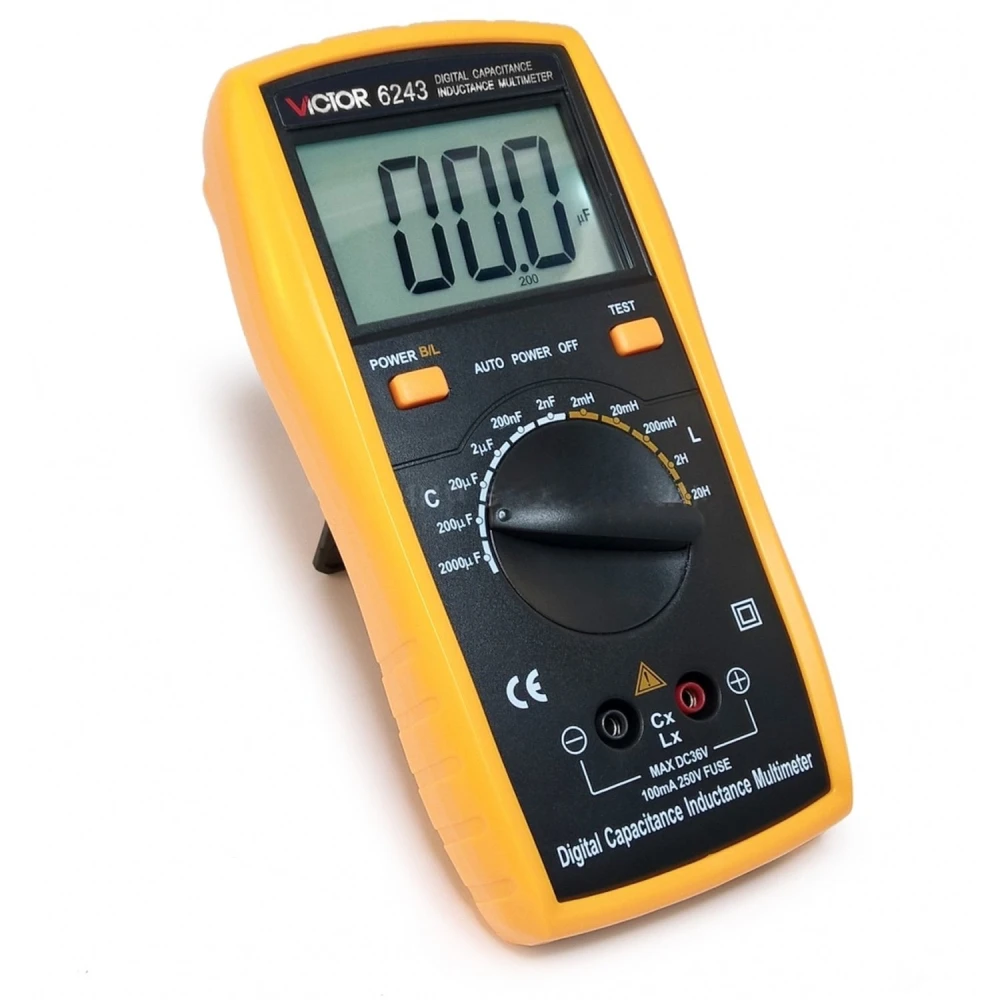
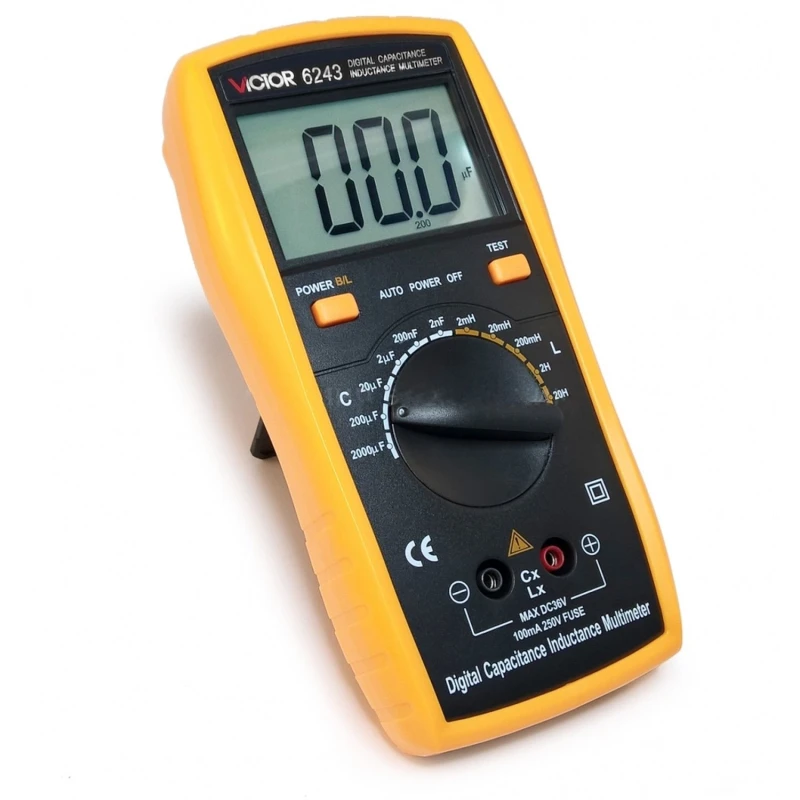
Victor 6243 LCR-meter voor nauwkeurige meting van inductie, capaciteit en weerstand
Merk: Victor
38,72€
IVA inbegrepen (Excl. btw: 32,00€)
Nog maar 1 op voorraad - bestel snel!
Standaardlevering
Wo, Apr 22 - Vr, Apr 24
Expresslevering
Ma, Apr 20 - Di, Apr 21
30 dagen retour
Gratis retourneren binnen 30 dagen
Beveiligde transactie






Share:
Gratis bezorging
Bij bestellingen boven 300€
Eenvoudig retourneren
30 dagen retourbeleid
Veilig betalen
100% veilig afrekenen
Kwaliteitsgarantie
Alleen originele producten
De Victor 6243 LCR-meter is een elektronisch apparaat dat is ontworpen om inductie (L), capaciteit (C) en weerstand (R) nauwkeurig te meten, fundamentele componenten in elektronische circuits. Deze meter is een onmisbaar hulpmiddel voor technici, ingenieurs en hobbyisten die werken aan reparatie, ontwerp of diagnose van elektronische apparatuur.
Belangrijkste kenmerken:
- Meten van inductie: Bereik van 2mH tot 20H met een nauwkeurigheid die varieert tussen ±(2.0%+5d) en ±(5.0%+15d), resolutie van 1uH tot 10mH en een meetfrequentie van ongeveer 200Hz.
- Meten van capaciteit: Bereik van 2nF tot 1000uF met nauwkeurigheid van ±(1.0%+5d) tot ±(5.0%+25d), resolutie van 1pF tot 100pF en een meetfrequentie van ongeveer 200Hz tot 8Hz, afhankelijk van het bereik.
- Meten van weerstand: Hoewel in de aangeleverde inhoud geen bereiken worden gespecificeerd, is de meter ontworpen om weerstand te meten als onderdeel van de basisfuncties.
- Hoge resolutie en nauwkeurigheid: Maakt betrouwbare resultaten mogelijk voor elektronische componenten, wat exacte diagnoses en afstellingen in circuits vergemakkelijkt.
- Meetfrequentie: Ongeveer 200Hz in de meeste bereiken, met sommige capaciteitsmetingen op lagere frequenties voor meer nauwkeurigheid.
Typische toepassingen:
- Diagnose en reparatie van elektronische componenten in werkplaatsen en laboratoria.
- Controle van componenten vóór installatie in circuits.
- Nauwkeurige meting in elektronische ontwerp- en prototypeprojecten.
- Kwaliteitscontrole in elektronische productie.
Compatibiliteit: Compatibel met een breed scala aan passieve elektronische componenten zoals spoelen, condensatoren en weerstanden. Het is een veelzijdig hulpmiddel voor elke omgeving waar nauwkeurige elektronische meting vereist is.
De Victor 6243 LCR-meter biedt een ideale combinatie van nauwkeurigheid, gebruiksgemak en veelzijdigheid, en is daarmee een betrouwbare investering voor professionals die op zoek zijn naar exacte en efficiënte resultaten bij hun elektronische metingen.
- Nauwkeurige meting van inductie, capaciteit en weerstand
- Breed bereik: inductie van 2mH tot 20H, capaciteit van 2nF tot 1000uF
- Hoge resolutie: tot 1pF en 1uH, afhankelijk van het bereik
- Meetfrequentie van ongeveer 200Hz voor de meeste functies
- Ideaal voor diagnose, reparatie en elektronisch ontwerp
Klantvragen & Antwoorden
Quines són les dimensions i el pes del mesurador, i què inclou la caixa en comprar-lo?
El Victor 6243 sol mesurar aproximadament 170 mm x 85 mm x 45 mm i pesa prop de 350 g. Normalment el paquet inclou el mesurador, cables de prova, manual d’usuari i, en alguns casos, una funda protectora. Tanmateix, recomanem confirmar amb el distribuïdor si hi ha accessoris addicionals o variacions.
El dispositiu requereix calibratge periòdic o algun tipus de manteniment especial?
Es recomana calibrar el dispositiu un cop l’any per garantir la precisió, especialment en aplicacions tècniques exigents. El manteniment principal consisteix a mantenir nets els terminals i guardar l’equip en un ambient sec. No requereix lubricació, però sí el canvi de bateries segons l’ús.
Quin tipus d’alimentació utilitza el Medidor LCR Victor 6243 i és compatible amb piles recarregables?
El mesurador sol funcionar amb una pila de 9 V tipus 6F22. Pot utilitzar tant piles alcalines convencionals com recarregables, sempre que siguin del mateix format i voltatge. Fer servir bateries de voltatge inferior o d’un tipus incompatible pot afectar la mesura o danyar l’instrument.
Quines són les principals diferències de precisió i velocitat respecte a altres mesuradors LCR digitals de gamma similar?
El Victor 6243 ofereix una bona precisió per a ús general, tot i que no arriba a l’exactitud de models de laboratori certificats; la seva velocitat de mesura sol ser d’1-2 segons per lectura, lleugerament més ràpida que la de models econòmics. En comparació amb equips professionals, pot tenir un marge d’error més gran en rangs baixos o molt alts, però la seva relació funcionalitat-preu és competitiva.
What are the meter's dimensions and weight, and what is included in the box when purchased?
The Victor 6243 typically measures approximately 170 mm x 85 mm x 45 mm and weighs around 350 g. The package normally includes the meter, test leads, user manual and, in some cases, a protective case. However, we recommend checking with the distributor for any additional accessories or variations.
Does the device require periodic calibration or any special maintenance?
It is recommended to calibrate the device once a year to ensure accuracy, especially in demanding technical applications. The main maintenance is keeping the terminals clean and storing the equipment in a dry environment. It does not require lubrication, but batteries should be replaced as needed.
What type of power supply does the Victor 6243 LCR Meter use, and is it compatible with rechargeable batteries?
The meter usually runs on a 9 V 6F22 battery. It can use either standard alkaline batteries or rechargeable ones, provided they are the same format and voltage. Using batteries with a lower voltage or an incompatible type may affect measurements or damage the instrument.
What are the main differences in accuracy and speed compared with other digital LCR meters in a similar range?
The Victor 6243 offers good accuracy for general use, although it does not match the precision of certified laboratory models; its measurement speed is usually 1-2 seconds per reading, slightly faster than budget models. Compared with professional equipment, it may have a larger error margin at very low or very high ranges, but its functionality-to-price ratio is competitive.
What are the dimensions and weight of the meter, and what is included in the box when purchased?
The Victor 6243 usually measures approximately 170 mm x 85 mm x 45 mm and weighs about 350 g. The package normally includes the meter, test leads, user manual and, in some cases, a protective case. However, we recommend checking with the distributor for any additional accessories or variations.
Does the device require periodic calibration or any special maintenance?
It is recommended to calibrate the device once a year to ensure accuracy, especially in demanding technical applications. The main maintenance consists of keeping the terminals clean and storing the equipment in a dry environment. It does not require lubrication, but batteries should be replaced as needed.
Schrijf een klantbeoordeling
Klanten die dit artikel kochten, kochten ook
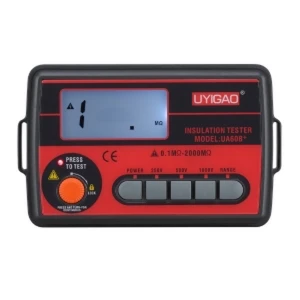
Uyigao UA60B+ isolatietester CAT III 1000 V voor weerstanden tot 2000 MΩ
41,20€
Nog maar 2 op voorraad
Uw recent bekeken artikelen

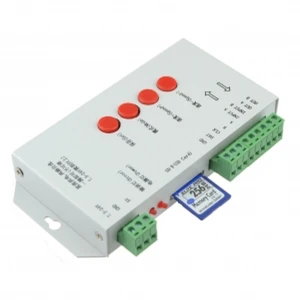
Programmeerbare T-1000S DMX512-controller voor LED RGB met geheugenkaart
10,89€
Nog maar 10 op voorraad
Victor 6243 LCR-meter voor nauwkeurige meting van inductie, capaciteit en weerstand
38,72€