


4,72€
Op voorraad

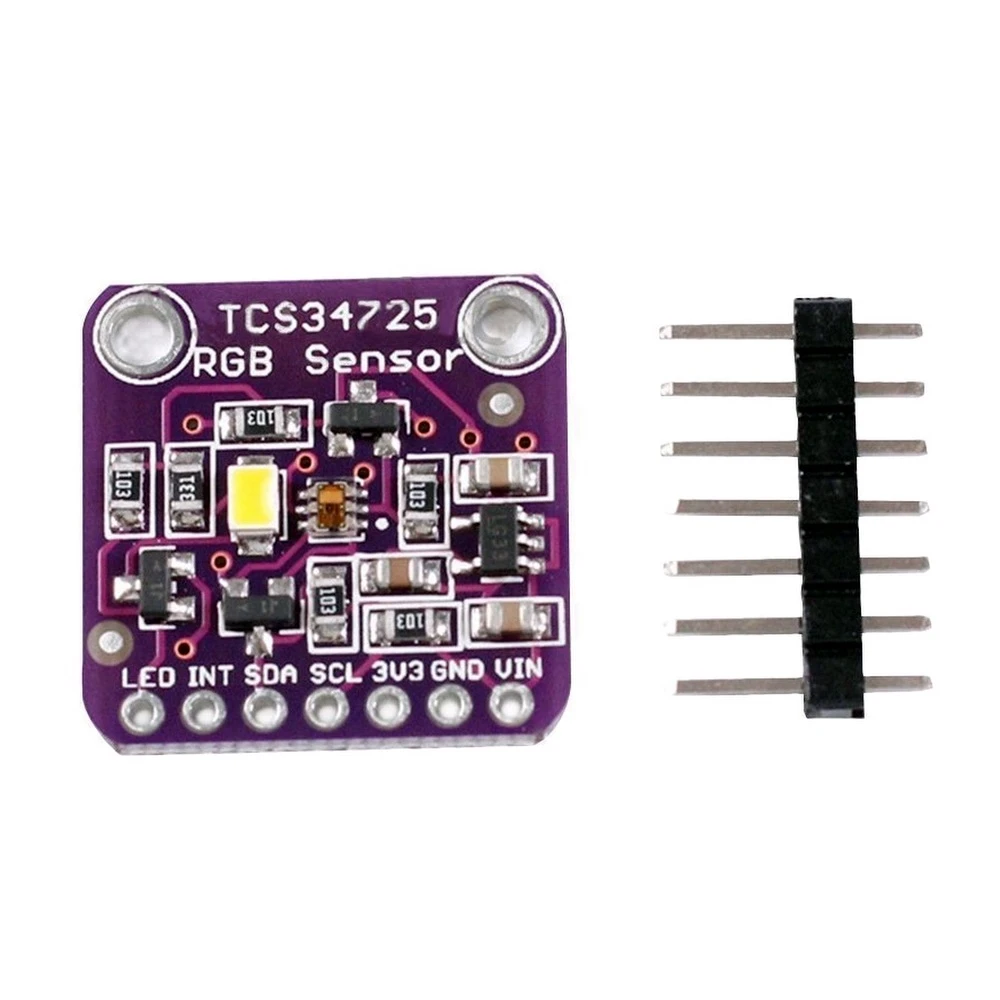
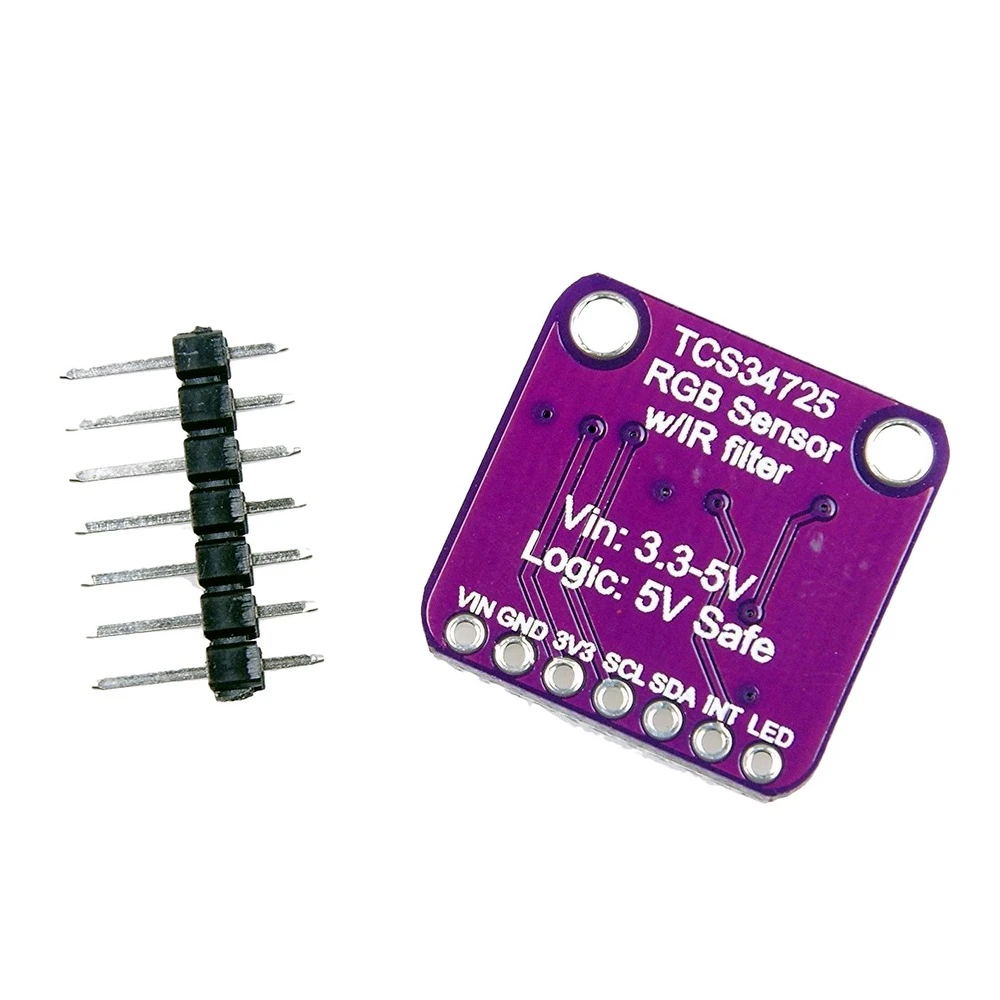

RGB-kleursensor TCS34725 voor Arduino met IR-filter en witte LED
Merk: satkit
4,72€
IVA inbegrepen (Excl. btw: 3,90€)
Op voorraad - Direct verzonden
Standaardlevering
Wo, Apr 22 - Vr, Apr 24
Expresslevering
Ma, Apr 20 - Di, Apr 21
30 dagen retour
Gratis retourneren binnen 30 dagen
Beveiligde transactie






Share:
Gratis bezorging
Bij bestellingen boven 300€
Eenvoudig retourneren
30 dagen retourbeleid
Veilig betalen
100% veilig afrekenen
Kwaliteitsgarantie
Alleen originele producten
De RGB-kleursensor TCS34725 voor Arduino is een geavanceerde module die is ontworpen voor nauwkeurige kleurdetectie in elektronische projecten. Deze sensor integreert detectie van rood, groen, blauw en wit licht, samen met een IR-blokkeringsfilter dat interferentie van infrarood licht minimaliseert, waardoor nauwkeurigere en realistischere kleurmetingen worden geleverd, vergelijkbaar met de menselijke waarneming.
Deze module heeft een indrukwekkend dynamisch bereik van 3,800,000:1, met instelbare integratietijden en versterking, waardoor hij geschikt is voor toepassingen die moeten werken achter donker glas of in omgevingen met grote lichtvariaties.
Belangrijkste kenmerken
- Detectie van rood, groen, blauw (RGB) en wit licht met geïntegreerd IR-blokkeringsfilter.
- Programmebare analoge versterking en instelbare integratietijd voor meer nauwkeurigheid.
- Breed dynamisch bereik van 3,800,000:1, ideaal voor diverse lichtomstandigheden.
- Hoge gevoeligheid, geschikt voor gebruik achter donker glas.
- Maskerbare interrupt en programmeerbare drempels met persistentiefilter.
- Laag energieverbruik met een ruststand van slechts 2.5 uA en programmeerbare stand-bymodus.
- Interface compatibel met snelle I2C-modus, met snelheden tot 400 kbit/s.
- Compatibel met ingangsspanningsniveaus van VDD of bus van 1.8 V.
- Compact, loodvrij ontwerp van 2 mm x 2.4 mm, ideaal voor integratie in kleine projecten.
Typische toepassingen
- Besturing van RGB-ledachtergrondverlichting voor schermen en apparaten.
- Meting van kleurtemperatuur in verlichting en fotografie.
- Detectie van omgevingslicht voor automatische helderheidsaanpassing van schermen.
- Analyse van vloeistoffen en gassen via kleurdetectie.
- Controle en sortering van producten op kleur in industriële processen.
Compatibiliteit en gebruik met Arduino
Deze sensor is ontworpen om eenvoudig te integreren met Arduino-borden, waardoor hij gemakkelijk te gebruiken is in elektronica- en robotica-projecten. De I2C-interface zorgt voor eenvoudige en snelle communicatie met compatibele microcontrollers, waardoor het uitlezen en verwerken van kleurgegevens efficiënt en nauwkeurig verloopt.
De verpakking bevat een RGB-kleursensor TCS34725, klaar voor gebruik in je projecten.
- Nauwkeurige detectie van rood, groen, blauw en wit licht met geïntegreerd IR-filter
- Instelbare versterking en integratietijd voor meer nauwkeurigheid
- Breed dynamisch bereik van 3,800,000:1 voor diverse lichtomstandigheden
- Hoge gevoeligheid, ideaal voor gebruik achter donker glas
- Snelle I2C-interface compatibel met snelheden tot 400 kbit/s
- Laag energieverbruik met programmeerbare rust- en stand-bymodi
- Compact en loodvrij, eenvoudig te integreren in Arduino-projecten
- Toepassingen in achtergrondverlichting, kleuranalyse en meer
Klantvragen & Antwoorden
A quins voltatges d’alimentació i nivell lògic és compatible el sensor, i com es connecta a una placa Arduino?
El sensor funciona amb alimentació de 3.3 V o 5 V i admet nivells lògics d’1.8 V a 5 V per a la interfície I2C. Es connecta mitjançant els pins SDA i SCL als corresponents de l’Arduino. En la majoria de plaques comercials no requereix resistències pull-up externes.
Quina és la sensibilitat mínima i màxima del sensor i fins a quin rang de lluminositat pot mesurar amb precisió?
El TCS34725 ofereix un rang dinàmic de 3,800,000:1 gràcies al seu guany i temps d’integració ajustables. Pot detectar lluminositats des de menys de 0.1 lux fins a aproximadament 10,000 lux amb precisió. Per a valors fora d’aquest rang, la linealitat pot disminuir.
Hi ha biblioteques compatibles i fiables per al seu ús amb Arduino i com es fa una calibració bàsica de color?
Sí, hi ha biblioteques estables com Adafruit_TCS34725 per a Arduino, que simplifiquen la integració i la gestió de dades. Per a una calibració bàsica, es recomana mesurar colors de referència coneguts i aplicar factors de correcció als valors RGB detectats per compensar desviacions de l’entorn o dels materials.
What supply voltage and logic level is the sensor compatible with, and how do I connect it to an Arduino board?
The sensor operates with a 3.3 V or 5 V supply and supports logic levels from 1.8 V to 5 V for the I2C interface. It connects via the SDA and SCL pins to the corresponding Arduino pins. In most commercial boards, external pull-up resistors are not required.
What is the minimum and maximum sensitivity of the sensor, and what brightness range can it measure accurately?
The TCS34725 offers a dynamic range of 3,800,000:1 thanks to its adjustable gain and integration time. It can detect brightness from less than 0.1 lux to approximately 10,000 lux with accuracy. Outside that range, linearity may decrease.
Are there compatible and reliable libraries for use with Arduino, and how is a basic colour calibration carried out?
Yes, there are stable libraries such as Adafruit_TCS34725 for Arduino, which simplify integration and data handling. For basic calibration, it is recommended to measure known reference colours and apply correction factors to the detected RGB values to compensate for environmental or material variations.
What supply voltages and logic levels is the sensor compatible with, and how do I connect it to an Arduino board?
The sensor operates from a 3.3 V or 5 V supply and supports logic levels from 1.8 V to 5 V for the I2C interface. It connects via the SDA and SCL pins to the corresponding Arduino pins. In most commercial boards, external pull-up resistors are not required.
What is the minimum and maximum sensitivity of the sensor, and what brightness range can it measure accurately?
The TCS34725 offers a dynamic range of 3,800,000:1 thanks to its adjustable gain and integration time. It can detect brightness from less than 0.1 lux up to approximately 10,000 lux with accuracy. Outside that range, linearity may decrease.
Are there compatible and reliable libraries for use with Arduino, and how is a basic colour calibration carried out?
Yes, there are stable libraries such as Adafruit_TCS34725 for Arduino, which simplify integration and data handling. For basic calibration, it is recommended to measure known reference colours and apply correction factors to the detected RGB values to compensate for environmental or material variations.
Vilka matningsspänningar och logiknivåer är sensorn kompatibel med, och hur ansluts den till ett Arduino-kort?
Sensorn fungerar med 3.3 V eller 5 V matning och stöder logiknivåer från 1.8 V till 5 V för I2C-gränssnittet. Den ansluts via SDA- och SCL-pinnarna till motsvarande pinnar på Arduino. Externa pull-up-motstånd krävs i de flesta kommersiella kort inte.
Schrijf een klantbeoordeling
Klanten die dit artikel kochten, kochten ook

Uw recent bekeken artikelen
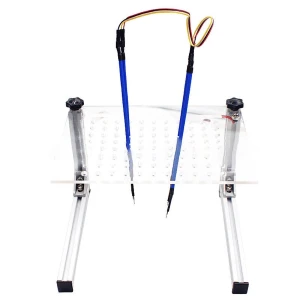
BDM LED-frame voor FGTECH BDM100 KESS KTAG - set met rooster en 4 probes
41,14€
Nog maar 5 op voorraad
Tactrix Openport 2.0 ECUFlash voor diagnose van Jaguar, Land Rover en Toyota
44,77€
Nog maar 1 op voorraad

 RGB-kleursensor TCS34725 voor Arduino met IR-filter en witte LED
4,72€