

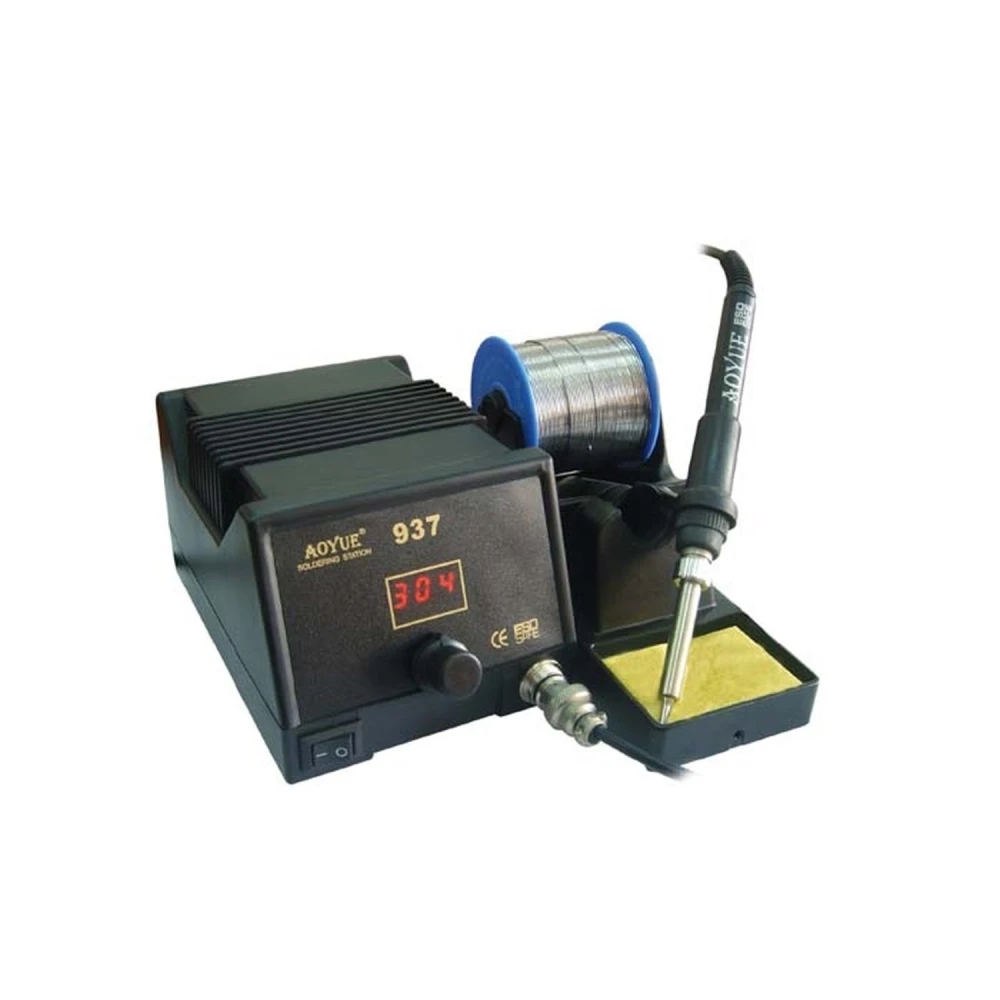
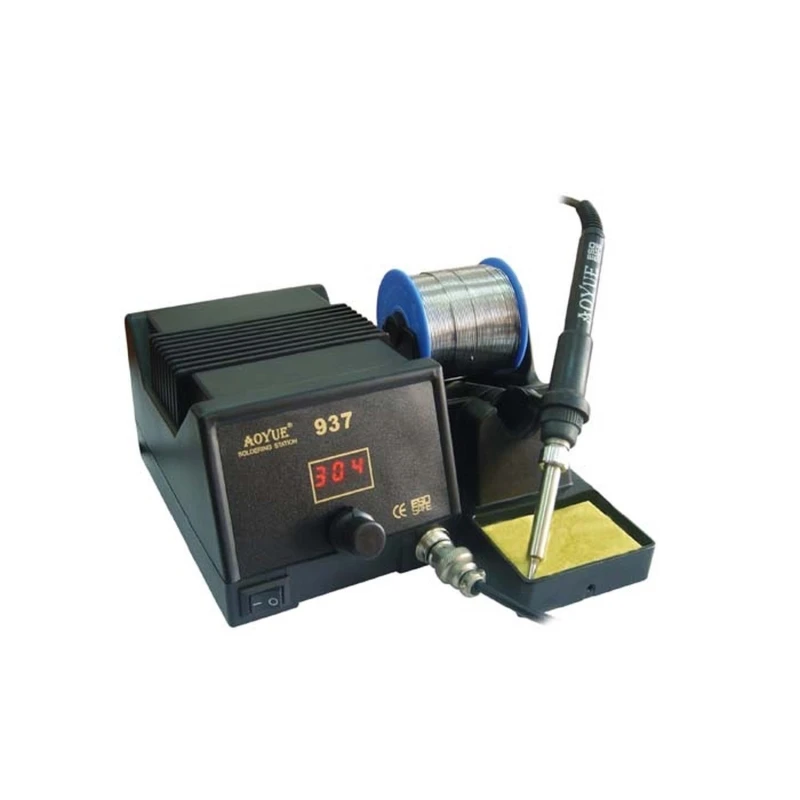
Aoyue 937 professioneel soldeerstation met digitale microprocessorregeling
Merk: Aoyue
IVA inbegrepen (Excl. btw: 56,35€)






Algemene beschrijving:
Belangrijkste kenmerken:
- Digitale regeling via microprocessor om de exacte temperatuur te behouden.
- Ingebouwde sensor die zorgt voor constante thermische stabiliteit.
- Touch-bediening met digitale weergave van de huidige en ingestelde temperatuur.
- Compact en robuust ontwerp dat weinig ruimte inneemt op de werkplek.
Technische specificaties:
- Voeding: 220V.
- Energieverbruik: 45W.
- Temperatuurbereik: 200 - 480ºC.
- Uitgangsspanning: 24V.
- Verwarmingselement: keramische basis voor efficiënte opwarming.
- Punt-aarde weerstand: minder dan 2 ohms.
- Punt-aarde potentiaal: minder dan 2mV.
- Afmetingen: 120 mm (breedte) x 80 mm (hoogte) x 140 mm (diepte).
- Gewicht: 2.5 kg.
Typische toepassingen:
Dit soldeerstation is ideaal voor technici en hobbyisten die precisie nodig hebben bij het solderen van elektronische componenten, het repareren van circuits, het monteren van printplaten en werkzaamheden waarbij strikte temperatuurcontrole vereist is.
Compatibiliteit:
Compatibel met standaard soldeerpunten (weerstand en punten niet inbegrepen in de garantie). Het ontwerp en de uitgangsspanning maken gebruik met een breed scala aan accessoires en elektronische componenten mogelijk.
Belangrijke opmerking:
De weerstand en de punten vallen niet onder de garantie.
- Microprocessorregeling voor nauwkeurige en stabiele temperatuur
- Ingebouwde sensor voor constante temperatuur
- Touch-bediening met digitaal display van huidige en ingestelde temperatuur
- Compact ontwerp dat de werkruimte optimaliseert
- Instelbaar temperatuurbereik van 200 tot 480ºC
- Efficiënt energieverbruik van 45W met 220V voeding
- Verwarmingselement met keramische basis voor extra duurzaamheid
- Compacte afmetingen: 120x80x140 mm en gewicht van 2.5 kg
Klantvragen & Antwoorden
Quins avantatges ofereix la regulació per microprocessador davant de les estacions de soldadura analògiques convencionals?
La regulació per microprocessador proporciona més estabilitat tèrmica i precisió en el control de temperatura, cosa que ajuda a reduir fluctuacions indesitjades i minimitza el risc de danyar components sensibles. En comparació, les estacions analògiques poden presentar variacions més àmplies i menys capacitat per mantenir una temperatura constant en soldar repetidament.
Quins són els materials principals de l'estació i quant pesa l'equip muntat?
L'estació utilitza un element calefactor ceràmic i components electrònics en un xassís compacte de metall i plàstic. El pes total de l'equip muntat és de 2,5 kg, cosa que assegura estabilitat durant l'ús i en facilita la manipulació al banc de treball.
Es pot fer servir aquesta estació de soldadura en regions amb voltatge diferent, com 110 V, o només funciona a 220 V?
El model especificat està dissenyat per funcionar exclusivament amb una alimentació de 220 V. No és compatible de fàbrica amb 110 V, i connectar-la a un voltatge inferior pot ocasionar baix rendiment o danys a l'equip, tret que s'utilitzi un transformador extern adequat.
Quines recomanacions hi ha per mantenir la durabilitat de l'element calefactor ceràmic i les puntes?
Es recomana netejar regularment les puntes, fer servir només esponges humides i evitar sobreescalfar el soldador durant períodes llargs sense soldar. Atès que la resistència i les puntes no estan cobertes per la garantia i són consumibles, un ús acurat i una neteja adequada n'allarguen la vida útil, però el desgast és inevitable amb un ús intensiu.
Quin és el rang operatiu de temperatura real i com afecta això la manipulació de diferents tipus de components electrònics?
El rang de temperatura ajustable va de 200 °C a 480 °C. Això permet soldar des de components delicats (a temperatures baixes) fins a aplicacions de soldadura més robustes que requereixen més calor (a temperatures més altes). És fonamental ajustar la temperatura segons el tipus de component per evitar danys tèrmics o soldadures defectuoses.
What advantages does microprocessor regulation offer over conventional analogue soldering stations?
Microprocessor regulation provides greater thermal stability and more precise temperature control, helping to reduce unwanted fluctuations and minimising the risk of damaging sensitive components. By contrast, analogue stations can show wider variations and have less ability to maintain a constant temperature during repeated soldering.
What are the main materials of the station and how much does the assembled unit weigh?
The station uses a ceramic heating element and electronic components in a compact metal and plastic housing. The total weight of the assembled unit is 2.5 kg, which ensures stability during use and makes it easy to handle on the workbench.
Can this soldering station be used in regions with different voltage, such as 110V, or does it only work at 220V?
The specified model is designed to work exclusively with a 220 V supply. It is not factory-compatible with 110 V, and connecting it to a lower voltage may cause poor performance or damage to the unit unless an appropriate external transformer is used.
What recommendations are there for maintaining the durability of the ceramic heating element and tips?
It is recommended to clean the tips regularly, use only damp sponges, and avoid overheating the soldering iron for long periods without soldering. As the heating element and tips are not covered by warranty and are consumables, careful use and proper cleaning extend their service life, but wear is inevitable with intensive use.
What is the actual operating temperature range, and how does this affect handling different types of electronic components?
The adjustable temperature range is 200°C to 480°C. This allows soldering from delicate components at lower temperatures to more robust soldering applications that require higher heat. It is essential to set the temperature according to the type of component to avoid thermal damage or poor solder joints.
Schrijf een klantbeoordeling
Klanten die dit artikel kochten, kochten ook
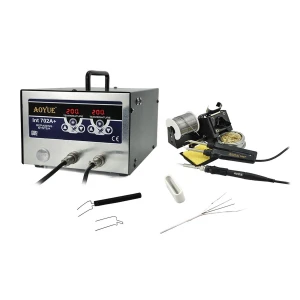
Aoyue Int 702a+ soldeerstation met soldeerbout en pincet voor PCB-reparatie
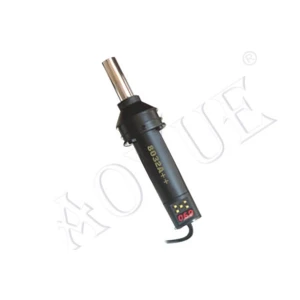
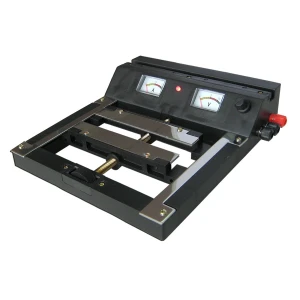
Aoyue 8032a++ digitale draagbare hetelucht soldeerstation met hoge precisie
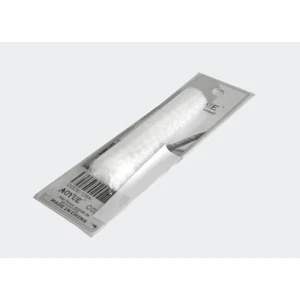
Aoyue 3233 soldeerbout weerstand model C032 - onderdeel voor soldeerstation
Uw recent bekeken artikelen
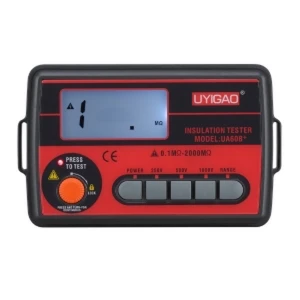
Uyigao UA60B+ isolatietester CAT III 1000 V voor weerstanden tot 2000 MΩ