


25,41€
Op voorraad
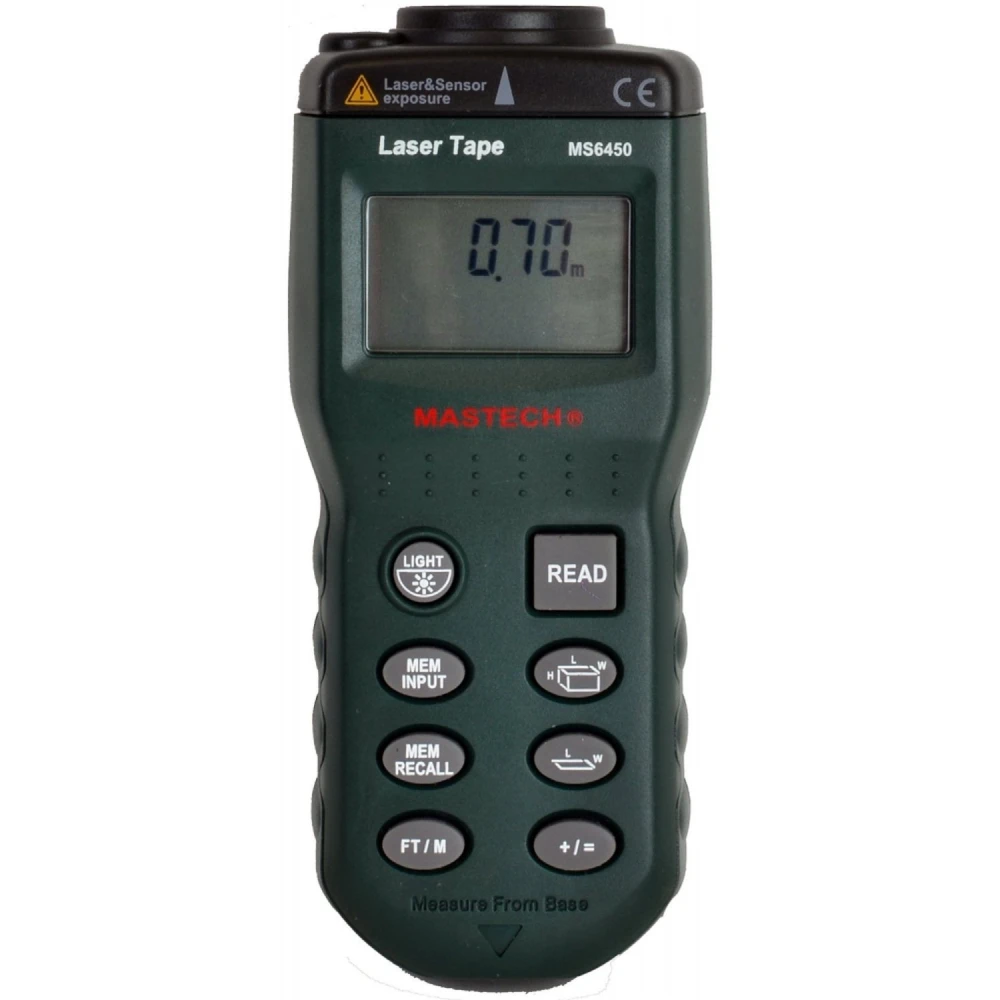
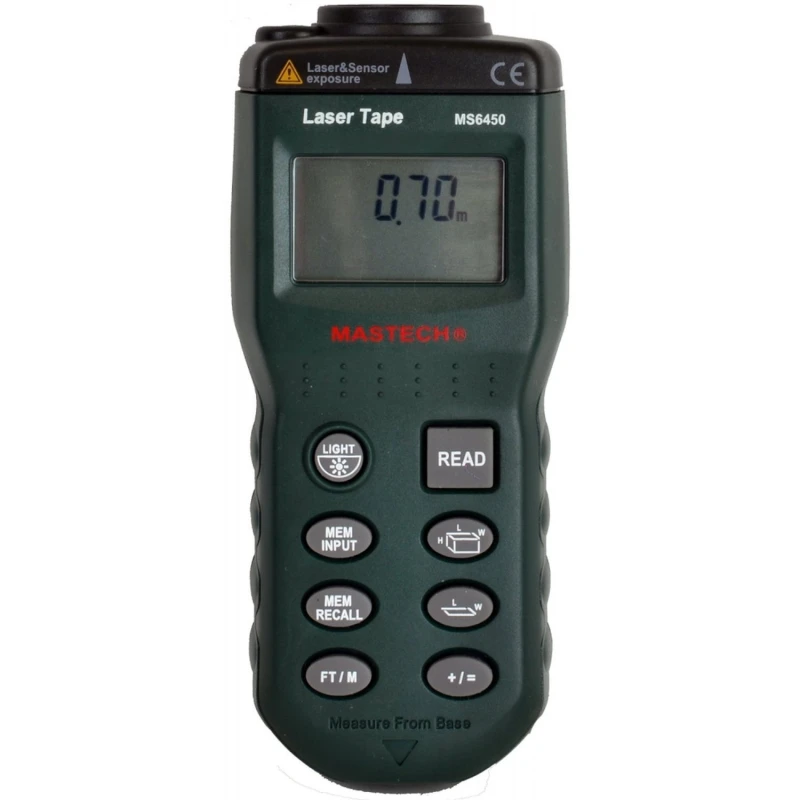
Mastech MS6450 ultrasone afstandsmeter met laserpointer
Merk: Mastech
25,41€
IVA inbegrepen (Excl. btw: 21,00€)
Beperkte voorraad
Standaardlevering
Wo, Apr 22 - Vr, Apr 24
Expresslevering
Ma, Apr 20 - Di, Apr 21
30 dagen retour
Gratis retourneren binnen 30 dagen
Beveiligde transactie


Share:
Gratis bezorging
Bij bestellingen boven 300€
Eenvoudig retourneren
30 dagen retourbeleid
Veilig betalen
100% veilig afrekenen
Kwaliteitsgarantie
Alleen originele producten
De Mastech MS6450 ultrasone afstandsmeter met laserpointer is een meetinstrument dat is ontworpen voor nauwkeurigheid en gebruiksgemak bij het meten van afstanden in verschillende omgevingen. Dankzij ultrasone technologie in combinatie met een rode laserpointer meet u nauwkeurig specifieke punten van 0,6 tot 15 meter.
Belangrijkste kenmerken:
- Model: MS6450
- Meetbereik: 0,6 a 15 meter
- Nauwkeurigheid: ± 0.5% ± 1 dígito
- Resolutie: 0,01 meter
- Openingshoek: ongeveer ± 5 graden
- Type laserdiode: Rood 650nm
- Voeding: 1 batterij 6F22 (9V)
- Batterijduur: tot 10 uur continu gebruik
- Oppervlakte- en volumeberekening: Ja, maakt het eenvoudig om oppervlakken en volumes te meten
- Meten in feet of meters: instelbaar naar behoefte
- Verlicht display: maakt aflezen in omgevingen met weinig licht eenvoudiger
- Afmetingen: 136 mm × 59 mm × 38 mm
- Gewicht: ongeveer 150 gram, inclusief batterij
- Maximale berekeningsbereik: lengte 9999 m, oppervlakte 99999 m², volume 99999 m³
Typische toepassingen:
- Snel en nauwkeurig afstanden meten bij bouw en renovatie.
- Oppervlakken en volumes berekenen voor architectuur- of engineeringprojecten.
- Meten in binnen- en buitenruimtes dankzij de laserpointer.
- Ideaal voor technici, installateurs en professionals die betrouwbare metingen nodig hebben.
Compatibiliteit en gebruiksgemak:
De Mastech MS6450 is geschikt voor metingen in feet of meters, instelbaar naar de voorkeur van de gebruiker. Het verlichte display maakt werken in omstandigheden met weinig licht mogelijk, en de 9V-batterij biedt een lange gebruiksduur voor continu werk. Bovendien maakt het compacte en lichte ontwerp transport en gebruik eenvoudig.
Dit apparaat is een voordelige en efficiënte oplossing voor wie op zoek is naar een goedkope elektronische afstandsmeter zonder in te leveren op nauwkeurigheid en functionaliteit.
- Meetbereik van 0,6 tot 15 meter met hoge nauwkeurigheid
- Rode laserpointer van 650nm voor extra precisie
- Geïntegreerde berekening van oppervlakte en volume
- Verlicht display voor eenvoudig aflezen in donkere omgevingen
- Voeding met 6F22 (9V)-batterij, tot 10 uur gebruik
- Instelbaar meten in meters of feet
- Compact en licht ontwerp, gewicht ongeveer 150 gram
Klantvragen & Antwoorden
What types of surfaces can affect the accuracy of the MS6450 ultrasonic distance meter?
Soft, absorbent or irregular surfaces (such as curtains, carpets or textured walls) can reduce the accuracy of the MS6450, as ultrasound requires a hard, flat surface to reflect properly. For best results, it is recommended to measure on smooth, solid walls.
Does the MS6450 backlit display allow clear reading outdoors or in strong sunlight?
The backlit display makes it easy to read indoors or in low-light conditions, but in direct sunlight visibility may be difficult, as it does not have high contrast designed specifically for outdoor use. It is recommended to shield the display from direct sun when taking measurements outdoors.
What is the absolute accuracy of the MS6450 at its maximum range of 15 metres, and how is that tolerance calculated?
The MS6450 offers electronic accuracy of ±0.5% of the measured value plus ±1 digit. For example, at 15 m, the maximum error margin would be 0.5% x 15 m = 0.075 m, plus 0.01 m for the digit, giving a total of ±0.085 m. The maximum expected tolerance is ±8.5 cm at maximum distance.
Is it possible to replace the MS6450 battery easily, and what is the main precaution to take?
The 9V (6F22) battery can be replaced easily by removing the rear cover. It is recommended to use quality alkaline batteries and avoid mixing old and new batteries. Make sure the meter is switched off before changing the battery to avoid accidental short circuits.
How does the MS6450 ultrasonic system compare with laser distance meters in terms of technical limitations?
Unlike laser distance meters, the MS6450 depends on the propagation and reflection of sound, which means lower accuracy and range (maximum 15 m), and greater sensitivity to environmental conditions. A laser distance meter can reach greater distances (up to 40 m or more) and maintain an accuracy of ±2 mm under almost any reflective surface condition, although it is usually more expensive.
What types of surfaces can affect the accuracy of the MS6450 ultrasonic distance meter?
Soft, absorbent or uneven surfaces (such as curtains, carpets or textured walls) can reduce the accuracy of the MS6450, as ultrasound requires a hard, flat surface to reflect properly. For best results, it is recommended to measure on smooth, solid walls.
Does the MS6450 backlit display allow clear reading outdoors or in strong sunlight?
The backlit display makes reading easier indoors or in low-light conditions, but in direct sunlight visibility may be difficult, as it does not have high contrast designed specifically for outdoor use. It is recommended to shield the display from direct sun when taking outdoor measurements.
What is the absolute accuracy of the MS6450 at its maximum range of 15 metres, and how is that tolerance calculated?
The MS6450 offers electronic accuracy of ±0.5% of the measured value plus ±1 digit. For example, at 15 m, the maximum error margin would be 0.5% x 15 m = 0.075 m, plus 0.01 m for the digit, giving a total of ±0.085 m. The maximum expected tolerance is ±8.5 cm at maximum distance.
Is it possible to replace the MS6450 battery easily, and what is the main precaution to take?
The 9V (6F22) battery can be replaced easily by removing the rear cover. It is recommended to use quality alkaline batteries and avoid mixing old and new batteries. Make sure the meter is switched off before changing the battery to avoid accidental short circuits.
How does the MS6450 ultrasonic system compare with laser distance meters in terms of technical limitations?
Unlike laser distance meters, the MS6450 depends on the propagation and reflection of sound, which means lower accuracy and range (maximum 15 m), and greater sensitivity to environmental conditions. A laser meter can reach greater distances (up to 40 m or more) and maintain accuracy of ±2 mm under almost any reflective surface condition, although it is usually more expensive.
Schrijf een klantbeoordeling
Klanten die dit artikel kochten, kochten ook
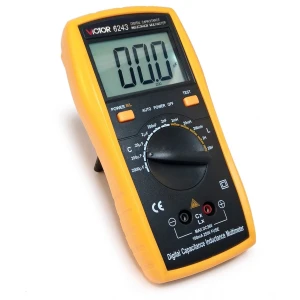
Victor 6243 LCR-meter voor nauwkeurige meting van inductie, capaciteit en weerstand
38,72€
Nog maar 1 op voorraad
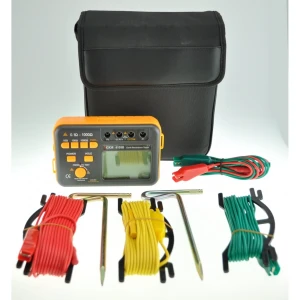
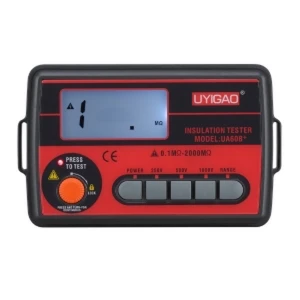
Uyigao UA60B+ isolatietester CAT III 1000 V voor weerstanden tot 2000 MΩ
41,20€
Nog maar 2 op voorraad
Uw recent bekeken artikelen
 Mastech MS6450 ultrasone afstandsmeter met laserpointer
25,41€