


12,10€
Op voorraad
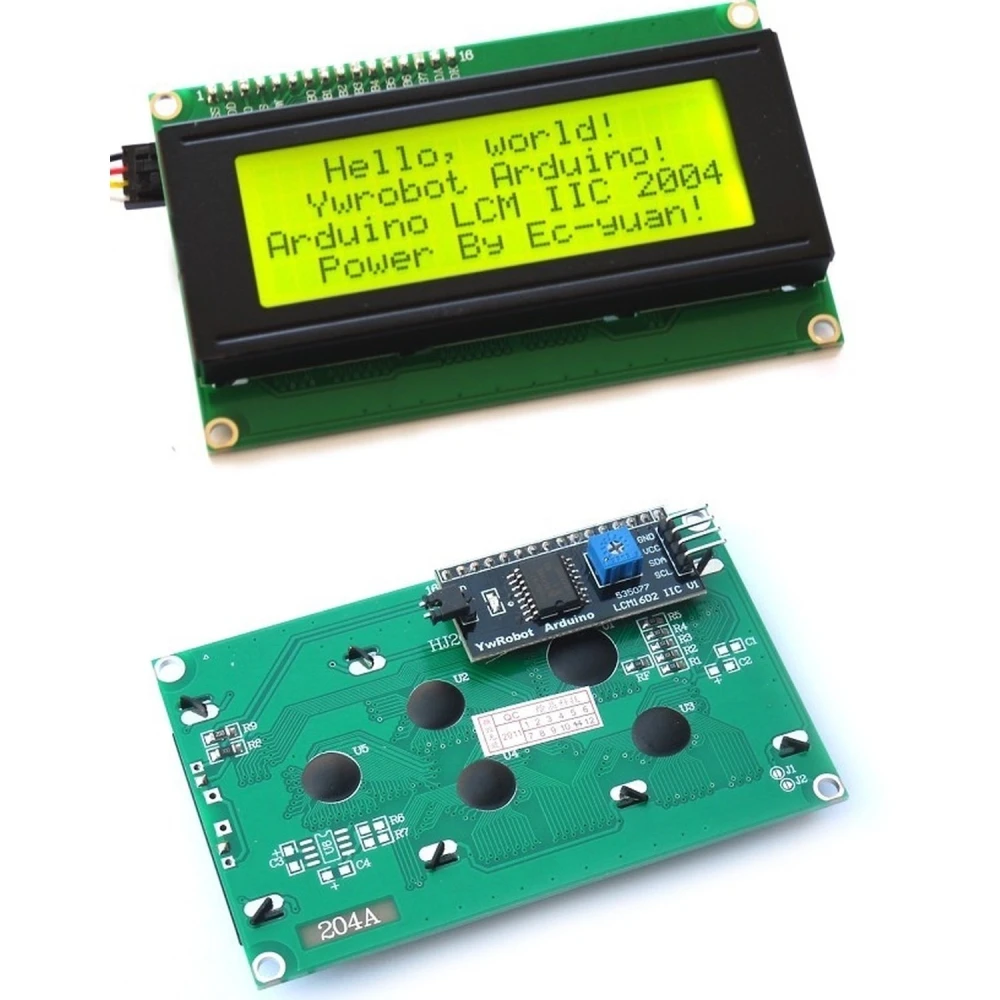
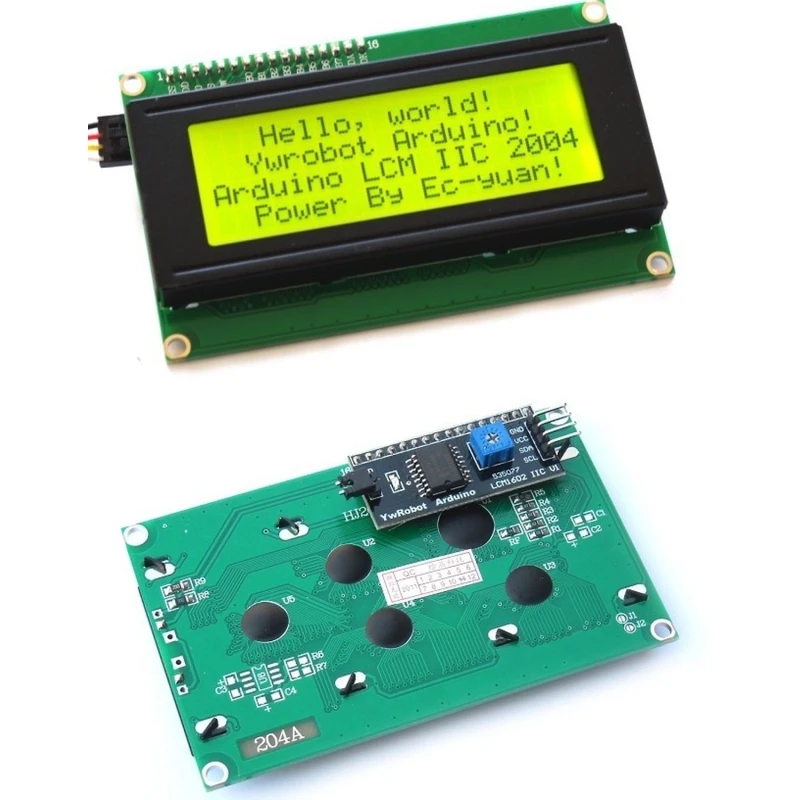
Groene 20x4 LCD met Serial IIC/I2C voor Arduino
Merk: satkit
12,10€
IVA inbegrepen (Excl. btw: 10,00€)
Beperkte voorraad
Standaardlevering
Wo, Apr 22 - Vr, Apr 24
Expresslevering
Ma, Apr 20 - Di, Apr 21
30 dagen retour
Gratis retourneren binnen 30 dagen
Beveiligde transactie






Share:
Gratis bezorging
Bij bestellingen boven 300€
Eenvoudig retourneren
30 dagen retourbeleid
Veilig betalen
100% veilig afrekenen
Kwaliteitsgarantie
Alleen originele producten
De LCD Verde 20x4 Caracteres con Serial IIC/I2C para Arduino is een FSTN LCD-scherm ontworpen om tot 4 regels met elk 20 tekens weer te geven, en biedt een duidelijke en efficiënte weergave voor je elektronische projecten. Met witte achtergrondverlichting op een groene achtergrond zorgt dit scherm voor uitstekende zichtbaarheid, zelfs bij weinig licht.
Dankzij de I2C-communicatie-interface vereenvoudigt deze module de aansluiting op Arduino-boards, met slechts vier pinnen: GND, VCC, SDA en SCL, wat de bekabeling vermindert en de integratie in je projecten vergemakkelijkt.
Belangrijkste kenmerken:
- Interface: I2C voor een eenvoudige en snelle aansluiting.
- I2C-adres: 0x27, compatibel met de meeste Arduino-bibliotheken.
- Achtergrondverlichting: Groen met inbegrepen witte verlichting, zonder extra componenten.
- Voeding: 5V voor compatibiliteit met standaard Arduino-boards.
- Afmeting: 60mm x 99mm, compact en eenvoudig te integreren.
- Contrastinstelling: Via ingebouwde potentiometer voor optimale weergave.
- Achtergrondverlichting instellen: Regelbaar via jumper om de verlichting aan te passen.
Typische toepassingen:
Dit LCD is ideaal voor Arduino-projecten waarbij informatie moet worden weergegeven, zoals sensorgegevens, menu's, systeemstatussen of andere tekst die duidelijk en leesbaar zichtbaar moet zijn. Het lage stroomverbruik en de eenvoudige installatie maken het perfect voor prototypes, embedded systemen en draagbare apparaten.
Compatibiliteit:
Compatibel met de meeste Arduino-boards die I2C-communicatie ondersteunen, is deze module een praktische oplossing voor ontwikkelaars en hobbyisten die op zoek zijn naar een betrouwbaar en eenvoudig te gebruiken display.
- FSTN LCD-scherm met 4 regels en 20 tekens per regel
- I2C-interface met adres 0x27 voor eenvoudige aansluiting
- Groene achtergrondverlichting met witte verlichting inbegrepen
- 5V-voeding, compatibel met Arduino
- Compact formaat van 60mm x 99mm
- Contrastinstelling via potentiometer
- Achtergrondverlichting regelbaar via jumper
Klantvragen & Antwoorden
Quins avantatges ofereix l’ús de la interfície I2C en aquesta pantalla LCD respecte a una connexió paral·lela estàndard?
La interfície I2C redueix significativament la quantitat de pins necessaris per a la connexió (només SDA i SCL, a més de VCC i GND), i permet alliberar pins en microcontroladors com Arduino. En comparació amb les connexions paral·leles, que requereixen almenys 6-7 pins de dades i control, I2C millora l’escalabilitat i l’organització del cablejat, tot i que la velocitat d’actualització pot ser lleugerament inferior a causa del protocol sèrie.
Quines són les dimensions i el pes exactes del mòdul LCD, i quins elements s’inclouen a la caixa?
El mòdul LCD fa 99 mm d’amplada per 60 mm d’alçada; el pes típic ronda els 75 g. El paquet estàndard només inclou el mòdul muntat (pantalla i placa controladora amb I2C), sense cables ni altres accessoris.
Amb quins microcontroladors i versions d’Arduino és totalment compatible aquest display fent servir la interfície I2C i l’adreça 0x27?
El display és compatible amb la majoria de plaques Arduino (Uno, Mega, Nano, Leonardo) i microcontroladors amb bus I2C estàndard (com ESP8266, ESP32, STM32, Raspberry Pi). Cal utilitzar una llibreria adequada (per exemple, LiquidCrystal_I2C). Confirmeu que l’adreça I2C 0x27 no estigui ocupada per un altre dispositiu al bus.
What advantages does using the I2C interface on this LCD display offer compared with a standard parallel connection?
The I2C interface significantly reduces the number of pins required for the connection (only SDA and SCL, plus VCC and GND), freeing up pins on microcontrollers such as Arduino. Compared with parallel connections, which require at least 6-7 data and control pins, I2C improves scalability and cable management, although refresh speed may be slightly lower due to the serial protocol.
What are the exact dimensions and weight of the LCD module, and what items are included in the box?
The LCD module measures 99 mm wide by 60 mm high; the typical weight is around 75 g. The standard package includes only the assembled module (display and controller board with I2C), with no cables or other accessories.
Which microcontrollers and Arduino versions is this display fully compatible with when using the I2C interface and address 0x27?
The display is compatible with most Arduino boards (Uno, Mega, Nano, Leonardo) and microcontrollers with a standard I2C bus (such as ESP8266, ESP32, STM32, Raspberry Pi). You need to use an appropriate library (e.g. LiquidCrystal_I2C). Make sure the I2C address 0x27 is not already in use by another device on the bus.
What advantages does using the I2C interface on this LCD display offer compared with a standard parallel connection?
The I2C interface significantly reduces the number of pins required for the connection (only SDA and SCL, plus VCC and GND), freeing up pins on microcontrollers such as Arduino. Compared with parallel connections, which require at least 6-7 data and control pins, I2C improves scalability and cable management, although refresh speed may be slightly lower due to the serial protocol.
What are the exact dimensions and weight of the LCD module, and what items are included in the box?
The LCD module measures 99 mm wide by 60 mm high; the typical weight is around 75 g. The standard package includes only the assembled module (display and controller board with I2C), with no cables or other accessories.
Which microcontrollers and Arduino versions are fully compatible with this display using the I2C interface and address 0x27?
The display is compatible with most Arduino boards (Uno, Mega, Nano, Leonardo) and microcontrollers with a standard I2C bus (such as ESP8266, ESP32, STM32, Raspberry Pi). You need to use a suitable library (e.g. LiquidCrystal_I2C). Make sure the I2C address 0x27 is not already in use by another device on the bus.
Vilka fördelar ger användningen av I2C-gränssnittet på denna LCD-skärm jämfört med en standard parallell anslutning?
I2C-gränssnittet minskar antalet pinnar som behövs för anslutningen avsevärt (endast SDA och SCL, samt VCC och GND), vilket frigör pinnar på mikrokontroller som Arduino. Jämfört med parallella anslutningar som kräver minst 6–7 data- och styrpinnar förbättrar I2C skalbarheten och kabeldragningens ordning, även om uppdateringshastigheten kan vara något lägre på grund av serieprotokollet.
Schrijf een klantbeoordeling
Klanten die dit artikel kochten, kochten ook
Uw recent bekeken artikelen


 Groene 20x4 LCD met Serial IIC/I2C voor Arduino
12,10€