


2,42€
Op voorraad
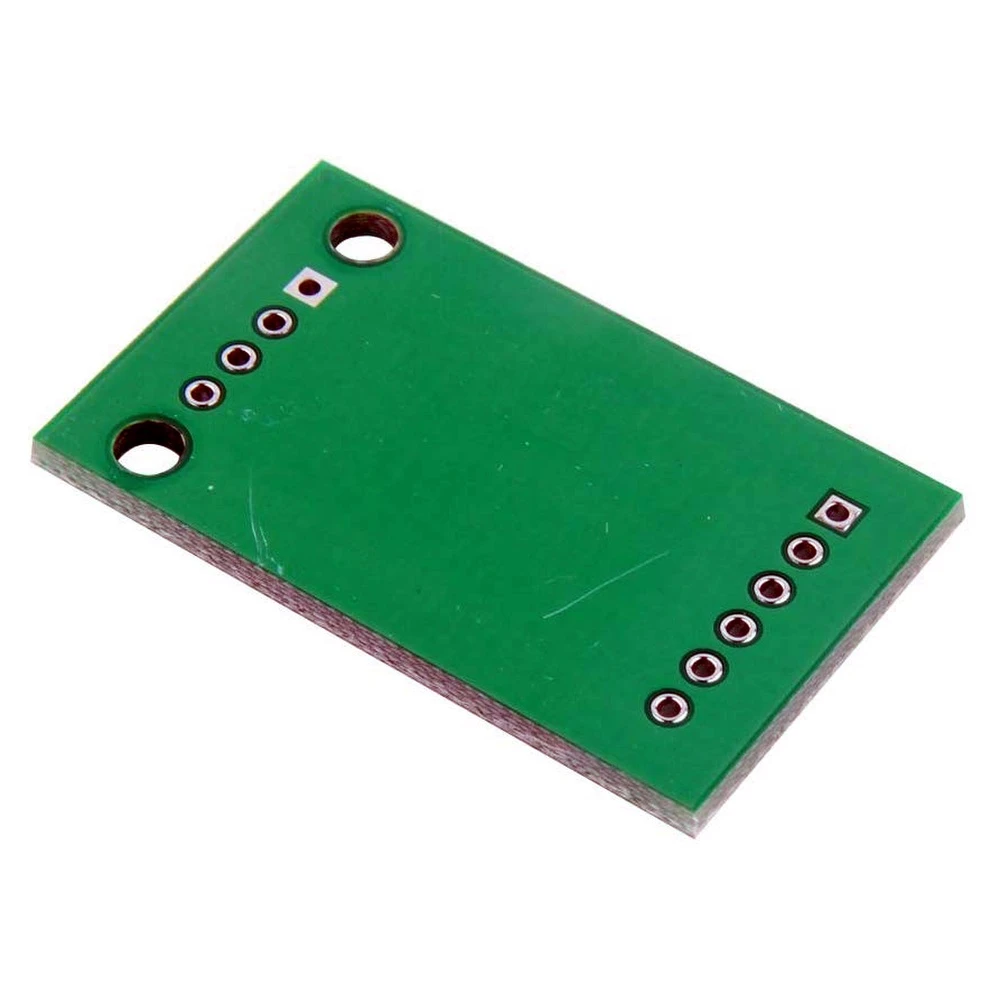
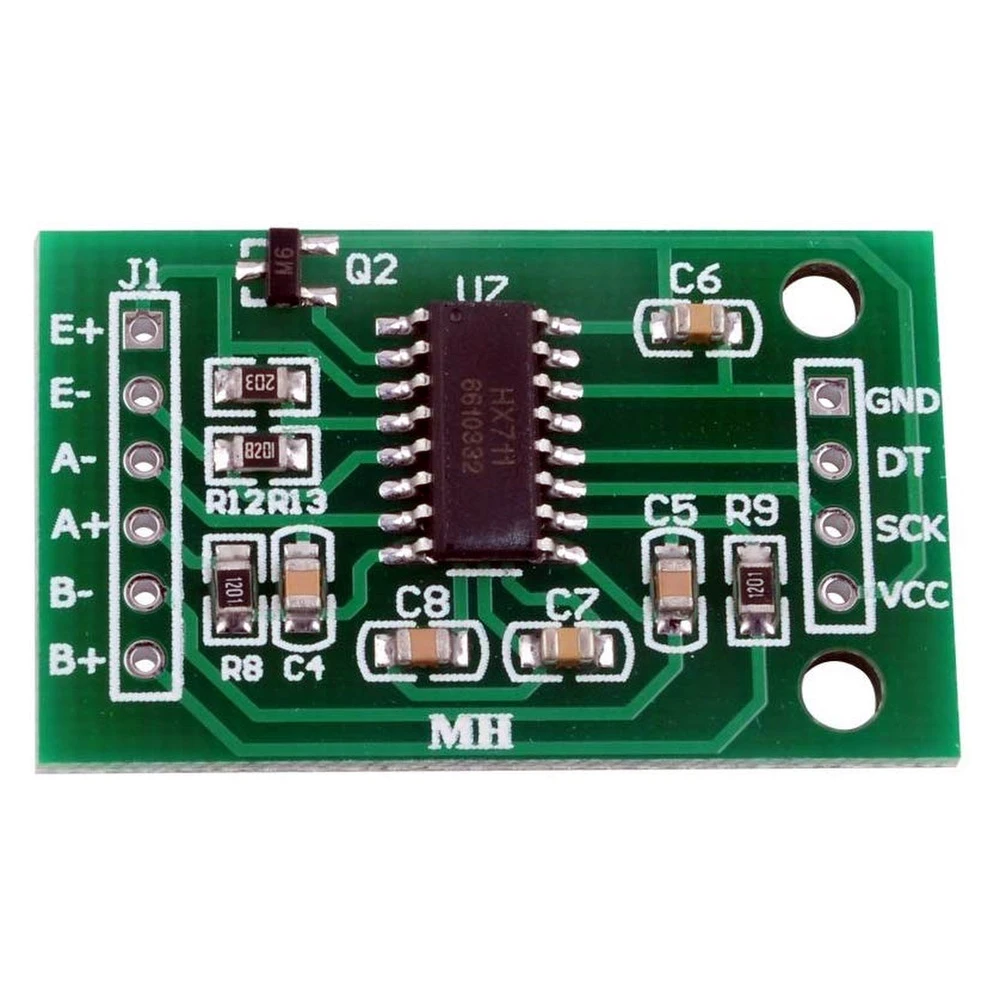
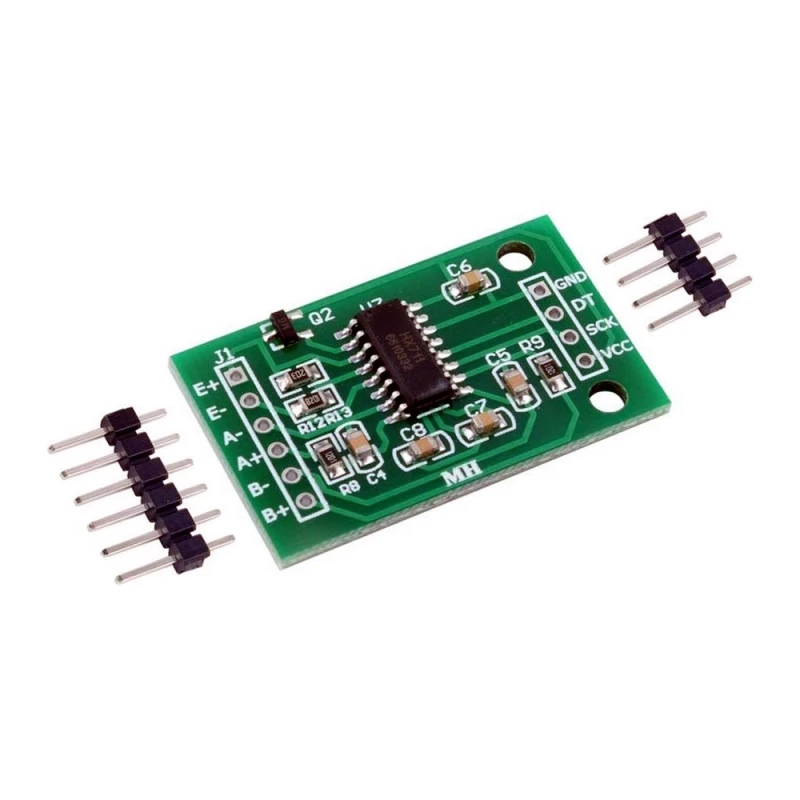
HX711 weegsensor Arduino - 24Bit A/D-module precisie
Merk: satkit
2,42€
IVA inbegrepen (Excl. btw: 2,00€)
Beperkte voorraad
Standaardlevering
Wo, Apr 22 - Vr, Apr 24
Expresslevering
Ma, Apr 20 - Di, Apr 21
30 dagen retour
Gratis retourneren binnen 30 dagen
Beveiligde transactie






Share:
Gratis bezorging
Bij bestellingen boven 300€
Eenvoudig retourneren
30 dagen retourbeleid
Veilig betalen
100% veilig afrekenen
Kwaliteitsgarantie
Alleen originele producten
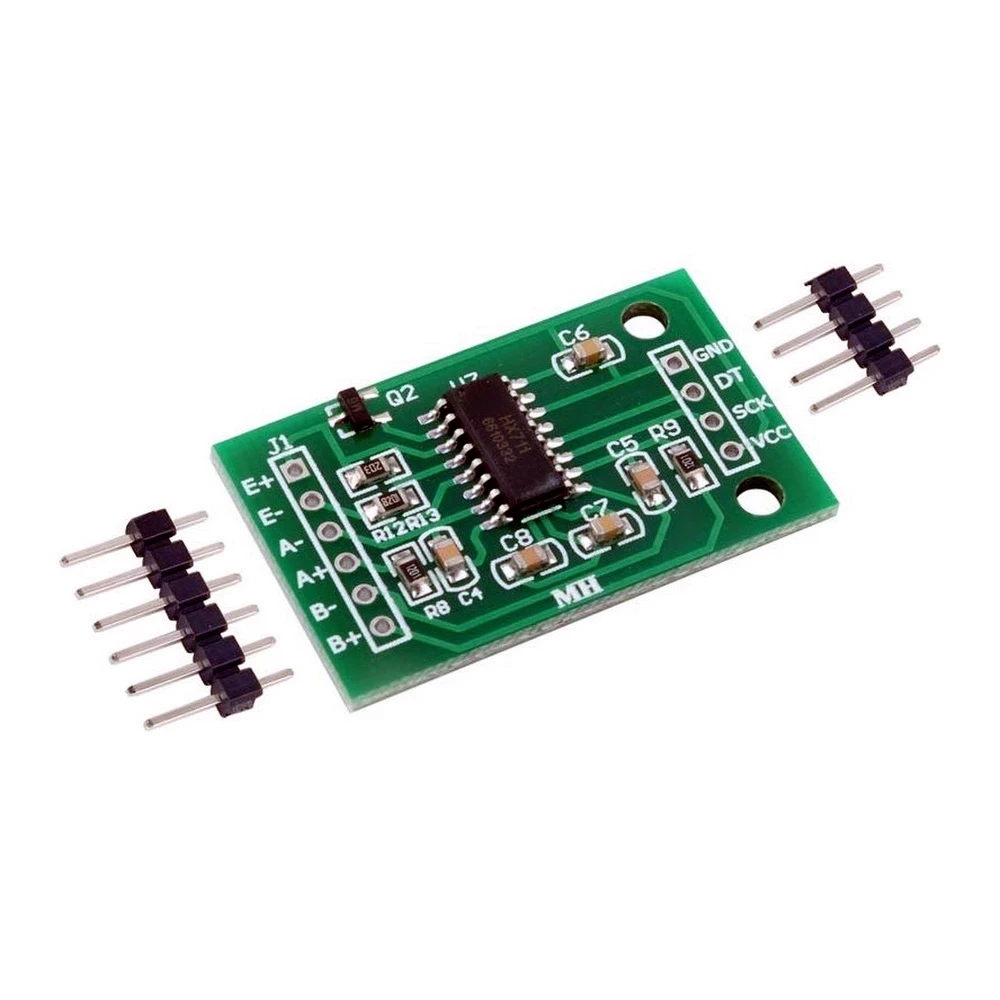
De HX711 weegsensor Arduino is een analoog-naar-digitaal (A/D) conversiemodule, ontworpen voor toepassingen met hoge precisie bij het meten van gewicht en druk. Deze module gebruikt een 24-bits converterchip die nauwkeurige en betrouwbare metingen mogelijk maakt, ideaal voor projecten met Arduino en andere microcontrollers.
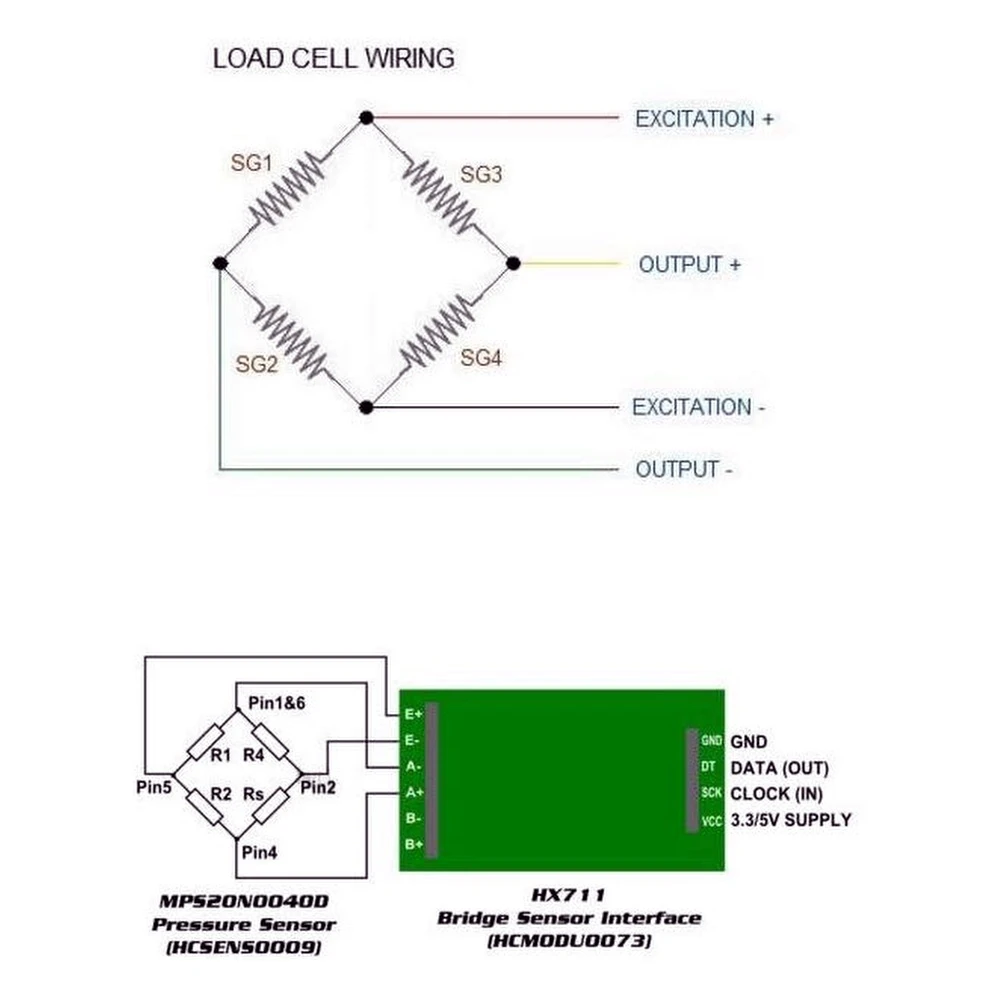
Deze module heeft twee selecteerbare differentiële analoge ingangskanalen, waardoor verschillende druksensoren of load cells kunnen worden aangesloten. Hij integreert een programmeerbare versterker (PGA) met versterkingsopties van 32, 64 en 128, wat de gevoeligheid en nauwkeurigheid van de metingen verbetert.
Belangrijkste kenmerken:
- Twee differentiële ingangskanalen voor flexibiliteit met sensoren.
- Actieve, ruisarme PGA-versterker met selecteerbare versterking (32, 64, 128).
- Geïntegreerde voedingsregelaar voor de ADC en de load cell.
- Interne oscillator waarvoor geen externe componenten nodig zijn, met optie voor een externe kristaloscillator.
- Automatische reset bij het inschakelen van de module.
- Eenvoudige seriële digitale interface, aangestuurd via pinnen zonder complexe programmering.
- Selecteerbare outputsnelheid: 10 samples per seconde (SPS) of 80 SPS.
- Gelijktijdige onderdrukking van 50 en 60 Hz storingen voor meer stabiliteit.
- Laag stroomverbruik: minder dan 1.5 mA bij normaal gebruik.
- Bedrijfsspanningsbereik: 2.6 V tot 5.5 V, compatibel met Arduino.
- Bedrijfstemperatuurbereik: -20 °C tot +85 °C.
Typische toepassingen:
- Ontwerp en bouw van zeer nauwkeurige elektronische weegschalen.
- Drukmeting met brugsensoren.
- Elektronica- en robotica-projecten met Arduino die nauwkeurige analoge metingen vereisen.
- Integratie in industriële besturings- en monitoringsystemen.
Deze module is compatibel met Arduino-borden en andere microcontrollers die seriële digitale communicatie ondersteunen. De lage kostprijs en hoge nauwkeurigheid maken het een uitstekende keuze voor ontwikkelaars en hobbyisten die op zoek zijn naar een betrouwbare weeg- en druksensor.
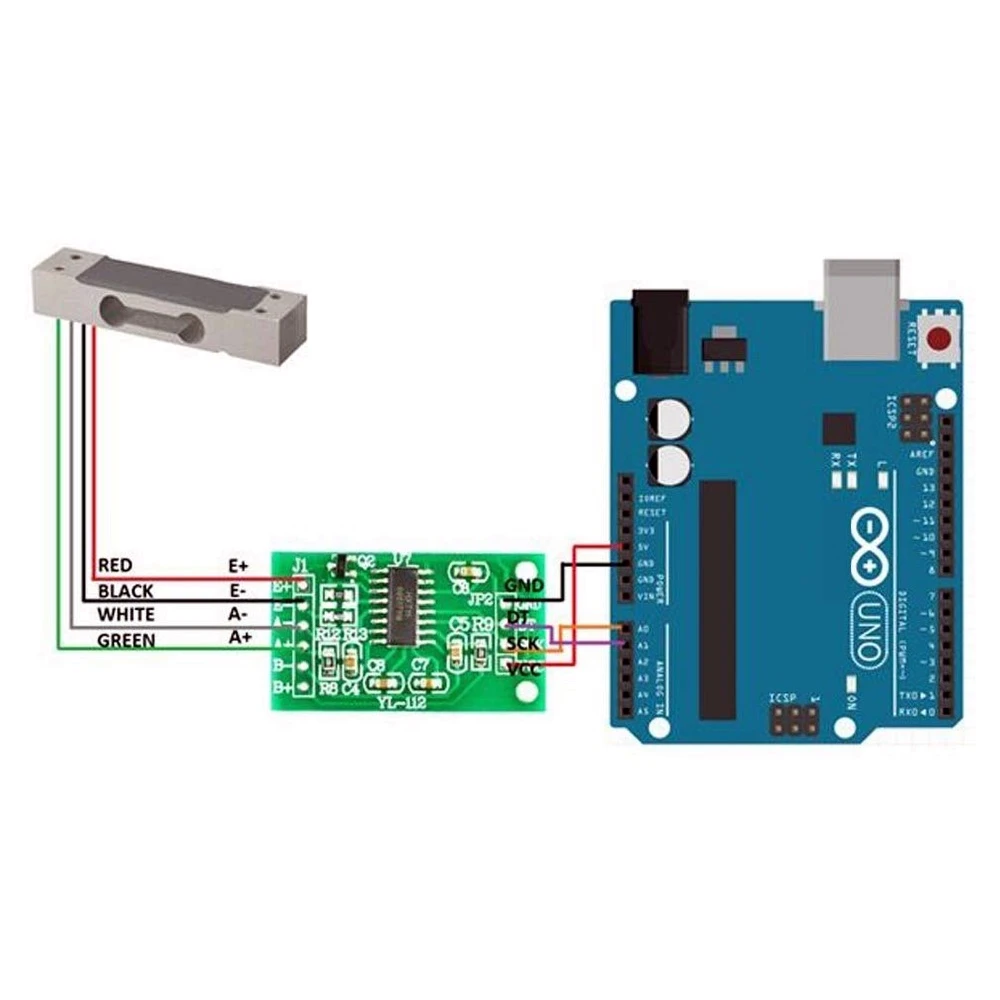
Voor gebruik wordt aanbevolen de load cell of druksensor aan te sluiten op de differentiële ingangen en de module te voeden met een spanning binnen het opgegeven bereik. De digitale uitlezing kan worden verkregen via compatibele Arduino-bibliotheken die de integratie en programmering vereenvoudigen.
- Twee selecteerbare differentiële analoge ingangskanalen
- Ruisarme PGA-versterker met programmeerbare versterking 32, 64, 128
- Geïntegreerde voedingsregelaar voor ADC en load cell
- Interne oscillator zonder externe componenten nodig
- Eenvoudige seriële digitale interface, zonder complexe programmering
- Selecteerbare outputsnelheid: 10 SPS of 80 SPS
- Gelijktijdige onderdrukking van 50 en 60 Hz storingen
- Laag verbruik: minder dan 1.5 mA bij normaal gebruik
- Spanningsbereik: 2.6 tot 5.5 V, compatibel met Arduino
- Temperatuurbereik: -20 °C tot +85 °C
Klantvragen & Antwoorden
Quins són els principals avantatges del sensor HX711 davant d’altres mòduls de pesatge A/D per a Arduino?
El HX711 destaca pel seu convertidor A/D de 24 bits de precisió, que permet obtenir mesures més sensibles i estables en comparació amb mòduls de menor resolució (com els de 12 o 16 bits). El seu doble canal diferencial facilita aplicacions de doble cèl·lula i el guany programable (128 i 64) ofereix flexibilitat per a diferents rangs de càrrega. A més, integra un regulador de voltatge i un oscil·lador intern, simplificant el circuit i reduint el cost en comparació amb alternatives que requereixen components externs.
Quines consideracions d’instal·lació he de tenir per obtenir mesures precises amb aquest sensor?
Per a mesures òptimes, es recomana col·locar el mòdul sobre una superfície estable, minimitzar les interferències electromagnètiques i cablejar amb conductors curts i trenats entre el HX711 i la cèl·lula de càrrega. És important connectar una sola font d’alimentació compartida amb el microcontrolador per evitar sorolls i fer calibracions periòdiques del sistema segons l’entorn i la cèl·lula utilitzada.
Quins són els límits de precisió i possibles fonts d’error en l’ús del HX711?
El HX711 ofereix una resolució teòrica de fins a 24 bits, però a la pràctica el seu error típic és d’entre 1-2 μV/bit i la precisió depèn molt de la qualitat de la cèl·lula de càrrega, el soroll elèctric, el guany seleccionat i la velocitat de mostreig (10SPS millora el soroll respecte a 80SPS). Les fonts d’error habituals inclouen fluctuacions tèrmiques, alimentació inestable i mala connexió dels cables. És recomanable aïllar bé el sistema i calibrar-lo en l’entorn real d’ús.
What are the main advantages of the HX711 sensor compared with other A/D weighing modules for Arduino?
The HX711 stands out for its 24-bit precision A/D converter, which allows more sensitive and stable measurements compared with lower-resolution modules (such as 12- or 16-bit ones). Its dual differential channel makes dual-cell applications easier, and the programmable gain (128 and 64) offers flexibility for different load ranges. It also integrates a voltage regulator and internal oscillator, simplifying the circuit and reducing cost compared with alternatives that require external components.
What installation considerations should I keep in mind to obtain accurate measurements with this sensor?
For optimum measurements, it is recommended to place the module on a stable surface, minimise electromagnetic interference and use short, twisted conductors between the HX711 and the load cell. It is important to connect a single shared power supply with the microcontroller to avoid noise and to carry out periodic calibration of the system according to the environment and the load cell used.
What are the accuracy limits and possible sources of error when using the HX711?
The HX711 offers a theoretical resolution of up to 24 bits, but in practice its typical error is between 1–2 μV/bit and accuracy depends heavily on the quality of the load cell, electrical noise, selected gain and sampling rate (10 SPS improves noise compared with 80 SPS). Common sources of error include thermal fluctuations, unstable power supply and poor cable connections. It is advisable to isolate the system properly and calibrate it in the real operating environment.
What are the main advantages of the HX711 sensor compared with other A/D load cell modules for Arduino?
The HX711 stands out for its 24-bit precision A/D converter, which allows more sensitive and stable measurements compared with lower-resolution modules (such as 12- or 16-bit ones). Its dual differential channel supports dual-cell applications, and the programmable gain (128 and 64) offers flexibility for different load ranges. It also integrates a voltage regulator and internal oscillator, simplifying the circuit and reducing cost compared with alternatives that require external components.
What installation considerations should I keep in mind to obtain accurate measurements with this sensor?
For optimum measurements, it is recommended to place the module on a stable surface, minimise electromagnetic interference and use short, twisted conductors between the HX711 and the load cell. It is important to use a single shared power supply with the microcontroller to avoid noise and to carry out periodic calibration of the system according to the environment and the load cell used.
What are the accuracy limits and possible sources of error when using the HX711?
The HX711 offers a theoretical resolution of up to 24 bits, but in practice its typical error is between 1–2 μV/bit and accuracy depends heavily on the quality of the load cell, electrical noise, selected gain and sampling rate (10SPS improves noise compared with 80SPS). Common sources of error include thermal fluctuations, unstable power supply and poor cable connections. It is advisable to isolate the system properly and calibrate it in the real operating environment.
Vilka är de främsta fördelarna med HX711-sensorn jämfört med andra A/D-vågmoduler för Arduino?
HX711 utmärker sig med sin 24-bitars A/D-omvandlare, vilket ger känsligare och stabilare mätningar jämfört med moduler med lägre upplösning (som 12 eller 16 bitar). Dess dubbla differentiella kanal underlättar tillämpningar med dubbla celler och den programmerbara förstärkningen (128 och 64) ger flexibilitet för olika lastområden. Dessutom integrerar den en spänningsregulator och intern oscillator, vilket förenklar kretsen och minskar kostnaden jämfört med alternativ som kräver externa komponenter.
Schrijf een klantbeoordeling
Klanten die dit artikel kochten, kochten ook
Uw recent bekeken artikelen
 HX711 weegsensor Arduino - 24Bit A/D-module precisie
2,42€